Seafood can be a standout part of an event menu, but it needs more planning than simply adding prawns, salmon or fish to the selection. The best seafood menus feel fresh, balanced and easy for guests to enjoy, with dishes that suit the service style, event timing and wider menu.
For catering in Melbourne, Essential Catering & Events can incorporate seafood across canapés, grazing-style displays, buffet options and plated meals where it suits the occasion. This article looks at how to build a balanced seafood menu that feels generous without being repetitive, while also considering freshness, dietary needs, timing and guest preferences.
Why Seafood Works Well in a Catering Menu
Seafood is a strong choice for event catering because it can feel premium while still being light and approachable. It suits a wide range of event formats, from cocktail-style functions and grazing tables to buffet service and more formal dining.
It also gives a menu variety. A seafood canapé can feel fresh and elegant, a seafood platter can create visual impact and a seafood main can provide substance without the heaviness of richer meat dishes. This makes seafood especially useful for warm-weather events, daytime functions and menus where guests will be socialising, networking or dancing after the meal.
Seafood also helps cater to a range of preferences. Many guests who avoid red meat or heavier dishes are comfortable choosing fish, prawns, smoked salmon or other lighter seafood options. When served alongside meat and vegetarian dishes, seafood can make the overall menu feel more flexible and considered.
Broad Guest Appeal and Dietary Flexibility
A seafood menu works best when it is planned as part of a broader catering selection rather than treated as the only feature. Some guests enjoy bold seafood flavours, while others prefer familiar options such as prawns, salmon or grilled fish. A balanced menu gives guests choice without making any option feel like an afterthought.
Seafood also suits many pescatarian guests and people who prefer lighter meals. Prawns, smoked salmon, scallops, white fish and other seafood options can feel indulgent without being too heavy. These dishes work particularly well when paired with fresh herbs, citrus, seasonal vegetables and simple sauces.
Dietary requirements still need careful attention. Shellfish allergies, gluten in crumbed items, dairy in creamy sauces and cross-contact between dishes all need to be managed properly. Clear labelling, separate utensils and thoughtful menu planning help guests feel confident about what they are eating.
Light, Balanced Eating Across Courses
One of seafood’s biggest strengths is that it can create a generous menu without making the meal feel too heavy. This is especially important for events where food is served over several hours or where guests move from canapés to mains, speeches, dancing or networking.
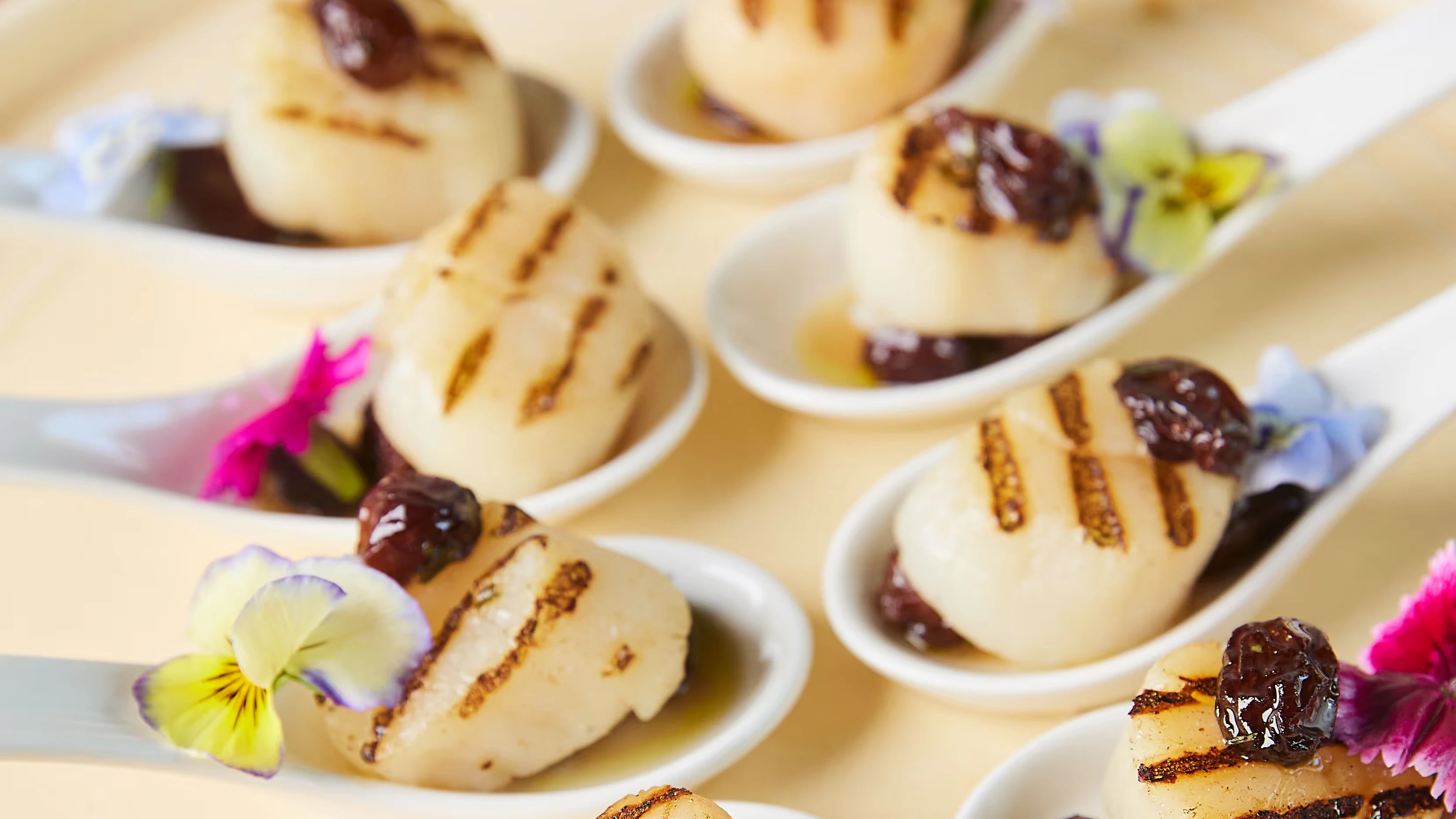
For canapés, seafood works well in small, clean portions. Smoked salmon, prawns, scallops and cured or chilled seafood items can provide flavour without filling guests too early. These pieces should be easy to eat in one or two bites and should not drip, crumble or require too much attention from the guest.
For grazing stations and shared platters, seafood can add freshness and visual appeal. Chilled prawns, smoked salmon, marinated seafood, crisp accompaniments, lemon, pickles, bread and light salads can create a display that feels generous without becoming too rich.
For mains or more substantial menu items, seafood can provide a satisfying centrepiece while keeping the meal balanced. Fish, salmon or other seafood-based dishes can feel substantial without the weight of heavier meat dishes. The key is to build the plate or buffet selection around clean flavours, seasonal vegetables and sides that complement the seafood.
Seafood Canapés for Light, Easy Service
Seafood canapés suit cocktail-style events, pre-dinner service and the opening stage of a more formal menu. They allow guests to enjoy fresh, elegant bites while still moving around, talking and settling into the event.
The best seafood canapés are simple to eat and easy to serve. Small portions, sturdy bases and clean garnishes make a big difference. Smoked salmon, prawns, scallops, ceviche-style seafood and sushi-style pieces can all work well when prepared and served correctly.
Temperature and timing are also important. Chilled seafood needs to stay cold until close to service, while hot seafood canapés should be cooked or finished in small batches and served quickly. This keeps texture, flavour and food safety under control.
A good canapé selection should also include contrast. If one seafood item is rich or creamy, another should be fresh and citrus-led. If several items are cold, one warm seafood canapé can add interest. This prevents the menu from feeling repetitive as trays circulate through the room.
Seafood Platters and Grazing Displays for Variety
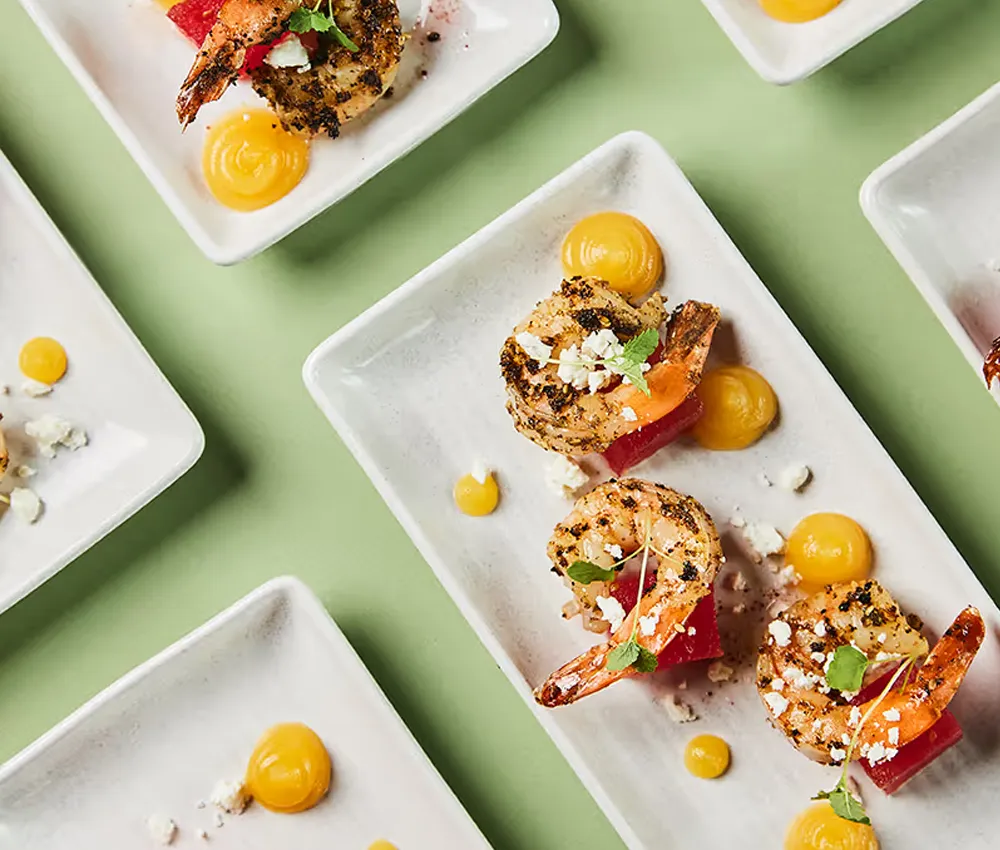
Seafood can add strong visual appeal to platters, grazing stations and shared displays. It creates an immediate sense of freshness and occasion, especially when paired with bright garnishes, clean accompaniments and simple sauces.
A well-designed seafood display should include a mix of familiar and more premium-feeling items. Prawns, smoked salmon, seafood bites, crisp breads, dips, salad elements and fresh citrus can be arranged in a way that feels generous without becoming cluttered. The aim is to give guests variety while keeping the display easy to navigate.
Presentation matters. Grouping similar items together makes the platter easier to understand and easier to replenish. Height, layers, boards, stands or chilled displays can help create visual impact while keeping seafood suitable for service. Garnishes such as lemon wedges, lime cheeks, fresh herbs and edible flowers should add colour and flavour rather than simply decorate the plate.
Sauces and accompaniments also help balance the platter. Cocktail sauce, citrus aioli, herb dressings, pickled vegetables, crisp salad leaves and lightly toasted bread can all support seafood well. Offering both lighter and richer condiments gives guests more choice without crowding the table.
Seafood Mains for a More Substantial Menu
Seafood mains give the menu structure and substance. They work well for formal plated dinners, buffet-style service and shared menus when the dishes are chosen to suit the event format.
For plated meals, fish and seafood dishes are often appealing because they can be presented neatly and paired with fresh sides. Salmon, barramundi, snapper or similar seafood options can work well with citrus, herbs, seasonal vegetables, potatoes, grains or light sauces. The dish should feel complete without being overly complicated.
For buffet-style service, seafood needs to be chosen carefully. Some delicate seafood dishes do not hold well over time, while firmer fish dishes, salmon, seafood-based hot dishes and carefully prepared buffet items can maintain flavour and texture more effectively. The goal is to choose options that still feel fresh and appealing once they reach the guest.
Shared seafood can also work when the event has a relaxed or social style. Larger seafood dishes, shared sides and fresh salads can create a generous table experience without requiring every plate to be individually composed.
Portion control is also important. Seafood mains do not need to be oversized, especially when the menu includes canapés, grazing items, sides and dessert. A well-balanced plate or buffet selection with good accompaniments will usually feel more satisfying than a large seafood portion with little thought given to the rest of the menu.
Balancing Seafood With Meat and Vegetarian Options
A seafood-focused menu still needs to cater for guests who prefer meat, vegetarian dishes or plant-based options. The strongest menus use seafood as a feature while still giving every guest a proper choice.
For canapé service, a practical balance might include several seafood options, a couple of meat options and at least one vegetarian or vegan item. This creates variety without making the seafood feel lost. For example, seafood canapés can sit alongside chicken, beef or vegetarian bites so guests have a broad selection from the start of the event.
For platters and grazing stations, seafood can be supported by nearby antipasto, cheese, vegetable, dip or salad displays. This allows seafood to remain a feature while still giving non-seafood guests enough choice.
For seated or buffet-style mains, it is usually best to offer seafood alongside meat and vegetarian or vegan options of similar quality. The vegetarian option should not feel like a token salad. A well-planned plant-based dish, seasonal vegetable dish or substantial vegetarian main can sit comfortably beside seafood and meat when planned properly.
The sides and sauces should also feel connected. If the seafood is served with seasonal greens and roasted potatoes, similar side profiles can be used across the meat and vegetarian dishes so the menu feels cohesive.
Planning Around Freshness, Timing and Guest Preferences
Seafood menus depend heavily on freshness and timing. Even a well-designed menu can fall flat if the seafood is not handled properly, served at the wrong temperature or matched poorly to the event schedule.
Chilled seafood should be kept cold until close to service. Prawns, smoked salmon, cured seafood and other chilled items need careful temperature control. Hot seafood should be cooked or finished as close to service as possible so it remains tender and appealing.
The event format also affects menu choices. A cocktail event may suit passed seafood canapés and grazing-style displays, while a seated dinner allows more control over plated seafood mains. A buffet requires dishes that hold well, replenish easily and remain visually appealing throughout service.
Guest preferences should also guide the balance of the menu. If the event includes a broad guest list, it is safer to include familiar seafood options alongside more distinctive dishes. This gives guests a range of choices without making the menu feel too narrow.
Allergen management is essential. Shellfish, finned fish, dairy, gluten and sauces containing hidden allergens should be clearly identified. Separate utensils, careful platter placement and clear communication with service staff help reduce confusion and protect guests.
Bringing the Seafood Menu Together
A strong seafood menu is not just a collection of impressive dishes. It needs to move smoothly from one course or service stage to the next, with enough contrast in flavour, texture, temperature and presentation to keep guests interested.
Canapés should feel light and easy to eat. Platters and grazing displays should create freshness, abundance and visual appeal. Mains should provide substance without overwhelming the rest of the menu. Meat, vegetarian and plant-based options should be planned with the same level of care so the full menu feels balanced and inclusive.
With thoughtful planning, seafood can become a memorable part of the catering experience. When freshness, timing, presentation and guest needs are all considered, seafood adds elegance and variety while still feeling practical, generous and suited to the occasion.