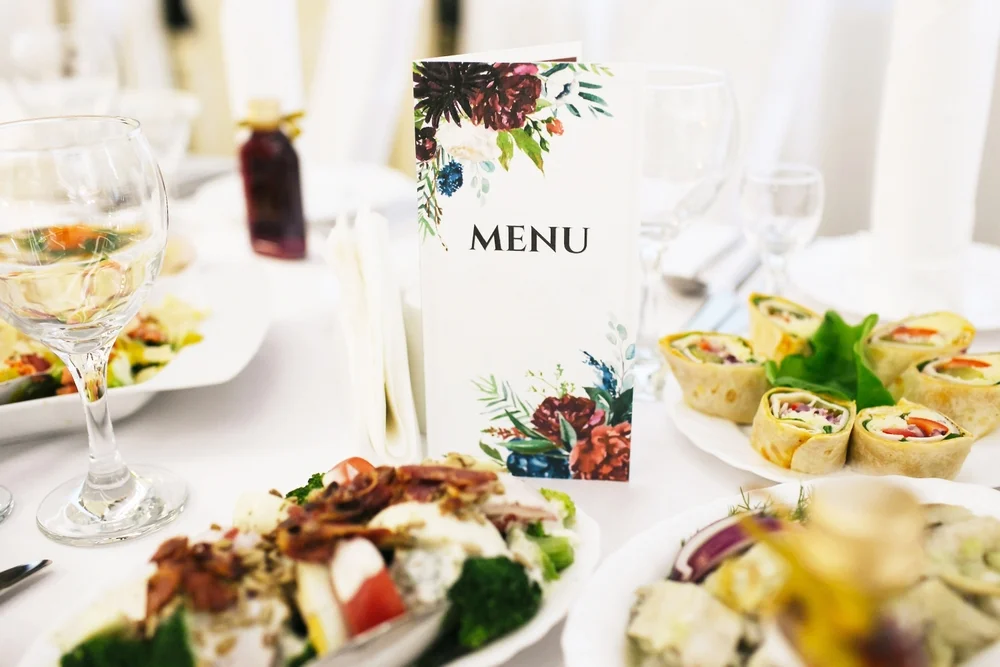
In Melbourne, we’re seeing more couples move away from one-size-fits-all reception packages and instead ask for something far more meaningful: a wedding menu that actually tells their story. It’s no longer just about choosing chicken or beef. It’s about weaving in the night-market dumplings from your first date, a nod to Nonna’s Sunday roast or a dessert that reminds everyone of summers spent down the coast. Food has become one of the most powerful ways couples personalise their wedding day, turning each course into a reflection of who they are and what matters most to them.
In this article, Essential Catering & Events explores why personalised wedding menus have become so important for couples planning wedding catering in Melbourne, and how those private memories and rituals can be transformed into beautiful, practical menu ideas. We’ll look at how to balance deeply personal touches with the reality of feeding a diverse guest list and how different catering styles, from formal plated dinners to shared feasts and food stations, change the overall feel of the celebration. We’ll also walk through the common mistakes couples make when customising their menu and how to avoid them, so you can create a wedding dining experience that feels authentic, generous and thoroughly enjoyed by everyone in the room.
Why Couples Want Personalised Wedding Menus
One of the main reasons couples are moving toward personalised menus is the desire to create a more memorable guest experience. Food is one of the few parts of a wedding that every guest shares, making it a natural place to reflect personality and intention.
Inclusivity also plays a major role. Melbourne weddings often include guests with a wide range of dietary and cultural requirements and couples want these needs addressed thoughtfully rather than treated as secondary options.
Personalised menus also help align the food with the style and pace of the celebration. Choices around serving style, course structure and timing influence how guests interact and how the event flows throughout the day.
Turning Personal Moments Into Menu Ideas
The most meaningful wedding menus begin with memories rather than specific dishes. Couples often start by reflecting on how they met, places that shaped their relationship and experiences that still hold emotional weight. These moments provide natural inspiration for menu choices that feel personal without being forced.
Early relationship milestones often translate easily into food. A first date at a small wine bar might inspire shared grazing plates, while a weekend away in regional Victoria can influence ingredient choices or flavour profiles drawn from that location. These references do not need to be literal. Subtle nods are often more effective than direct recreations.
Family traditions also play a key role. Long-standing recipes, cultural celebration foods or dishes tied to family gatherings can be adapted for a wedding setting. The goal is to preserve the essence and meaning of the dish while refining presentation and portioning so it suits a larger guest list.
Travel experiences frequently influence menu design as well. Rather than recreating a destination, couples often draw on specific flavours, textures or ways of sharing food that remind them of those trips. This approach keeps the menu refined while still evoking a sense of place and memory.
Ultimately, this process starts with conversation. Everyday eating habits, favourite venues and recurring food rituals often reveal the strongest ideas. When these details are thoughtfully woven together, the menu becomes a shared experience that feels personal, intentional and easy for guests to enjoy.
Balancing Personal Meaning With Guest Enjoyment
Creating a wedding menu that feels personal while still appealing to a wide range of guests requires balance. Food can tell a story, but it also needs to be approachable, satisfying and practical to serve across a full guest list.
Personal dishes often work best when they are interpreted rather than recreated exactly. A meaningful meal from early in a relationship may inspire flavours, ingredients or formats that suit a wedding setting, rather than appearing on the menu in its original form. This approach keeps the sentiment intact while ensuring the food works for scale, timing and service.
Guest enjoyment also depends on variety and inclusivity. While couples may love bold or adventurous flavours, not every guest will share the same preferences. Menus tend to work best when more distinctive elements are balanced with familiar options, allowing guests to engage with the couple’s story without feeling uncertain about what they are eating.
Dietary requirements are another key part of this balance. Thoughtfully designed vegetarian, vegan and gluten-free dishes should reflect the same care and flavour direction as the main menu. When alternatives feel intentional rather than secondary, all guests can share in the overall dining experience.
The most successful wedding menus reflect the couple clearly while remaining generous to their guests. When personal meaning and guest comfort are considered together, the result is a menu that feels authentic, enjoyable and well suited to the celebration as a whole.
How Catering Style Shapes the Overall Experience
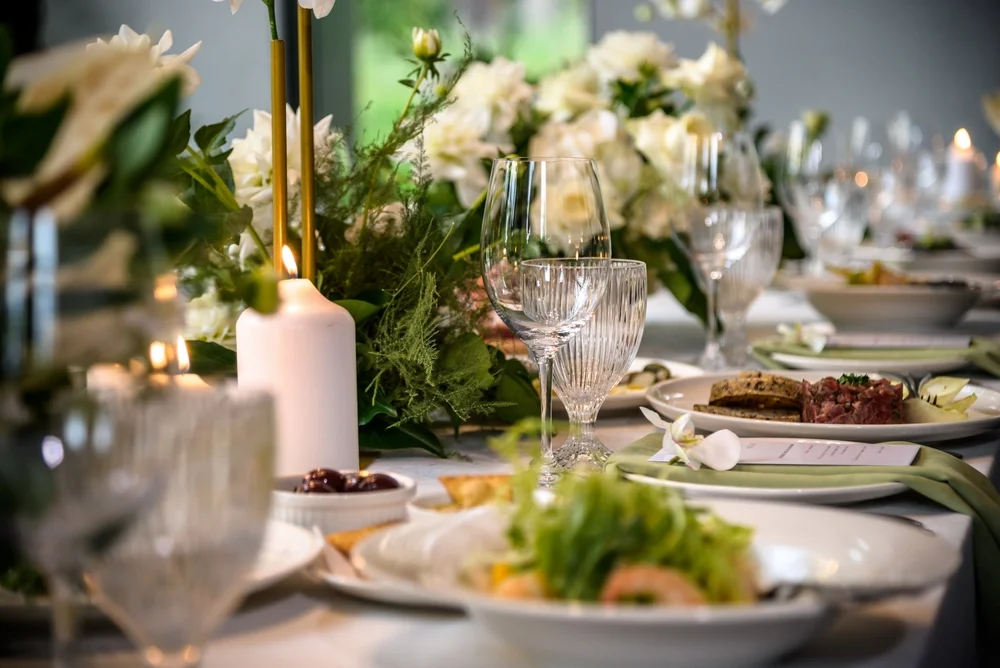
One of the most influential decisions couples make when planning their wedding menu is the catering style itself. Whether the food is served as a plated dinner, a shared feast or a cocktail-style reception shapes how guests interact, how the event flows and how the couple’s story is experienced through food.
Atmosphere and Interaction
A plated, multi-course dinner creates a formal and structured atmosphere. Guests remain seated, courses are delivered in sequence and the focus naturally shifts to flavour, presentation and timing. This style suits weddings where speeches, formal moments and a sense of occasion are central to the evening.
Shared feasting and family-style dining encourage a more relaxed, communal feel. Large platters passed around the table invite conversation and connection, even between guests meeting for the first time. This approach often reflects how couples like to host at home, with generous portions and a less rigid structure that allows guests to engage with the meal together.
Cocktail-style catering creates a more fluid and energetic environment. Roaming canapés, grazing stations and food bars allow guests to move freely, mingle and spend more time on the dance floor. This style suits couples who prioritise social interaction and a lively atmosphere over a traditional seated meal.
Flow of the Celebration
Catering style also influences the pace of the day. Plated dinners provide clear breaks for speeches and formalities, while shared meals offer flexibility in timing and service. Cocktail-style catering allows food to move with guests throughout the venue, supporting a dynamic layout without anchoring everyone to a table.
Ultimately, catering style is not just about how food is served. It plays a central role in shaping the mood, rhythm and guest experience of the wedding as a whole.
Common Mistakes With Personalised Wedding Menus
Personalised wedding menus work best when they enhance the guest experience rather than complicate it. Many well-intentioned ideas fall short because of a few common and avoidable issues.
Prioritising Theme Over Taste
Couples can become attached to a specific cuisine or meaningful memory, but a dish that holds personal significance may still be too rich, too spicy or too unfamiliar for a broad guest list. Strong menus balance personal meaning with food that is approachable and enjoyable for most guests.
Getting Portion Size and Pacing Wrong
Menus designed to showcase many ideas at once can become too long or too heavy. Multiple courses and food moments may overwhelm guests, while overly minimal menus can leave them hungry over a long evening. The structure of the menu, including how much food is served and when, plays a major role in guest comfort.
Overlooking Dietary Requirements
When menus focus only on the couple’s favourites, guests with dietary needs can end up with basic alternatives that feel disconnected from the main menu. Thoughtful planning ensures that dietary options reflect the same care and flavour direction, so everyone feels included.
Ignoring Logistics and Venue Constraints
A menu that works in theory may not suit the venue’s kitchen, staffing levels or service conditions. Dishes that require complex preparation or do not hold well can lose quality when scaled for larger guest numbers. Personalisation should always account for how food will be executed on the day.
Trying to Include Too Much at Once
Menus that attempt to cover every trend or preference often lose clarity. A personalised menu works best when it follows a clear narrative and allows each course to support that story rather than compete with it.
In the end, a personalised wedding menu is about more than food. It allows couples to reflect their story while creating an experience that feels welcoming and considered for their guests. When personal meaning, guest enjoyment and practical planning are aligned, the menu becomes a natural part of the celebration rather than a separate feature. Done well, it leaves guests feeling connected to the couple and the day as a whole.