.webp)
Planning a wedding budget involves balancing the guest experience with practical spending decisions. For couples considering wedding catering in Melbourne, late-night food can be a worthwhile addition, but it is not essential for every reception. At Essential Catering & Events, we often see couples weighing the benefits of serving an extra round of food against other priorities, such as the main meal, beverage package and entertainment.
The value of late-night food depends on the timing of the reception, the style of celebration and how long guests are likely to stay. This article explains when late-night food genuinely adds value, which menu styles tend to work best and how guest numbers, venue logistics and service timing can help determine the right approach. By considering these factors, couples can decide whether late-night food deserves a place in their wedding plans.
When Is Late-Night Food Worth Including?
Late-night food earns its place in a wedding budget when it serves a clear purpose. It can help keep guests comfortable during a long reception, bridge the gap between dinner and departure and provide something substantial for guests who have spent several hours dancing and enjoying the beverage package.
The key question is whether a significant number of guests will still be at the venue several hours after the main meal has finished. When dinner is served early and the celebration continues late into the evening, a carefully timed snack can feel like a thoughtful addition rather than an unnecessary extra.
Guest Numbers, Timing and the Flow of the Day
Late-night food is often most valuable when:
- The reception runs for six hours or longer from pre-dinner drinks and canapés to the final dance.
- Dinner is served relatively early, such as before 6:30 pm.
- The couple expects guests to remain at the venue for an extended celebration.
- Dancing and extended beverage service form a major part of the reception.
In these situations, guests may go four or five hours between the end of the main meal and departure. A simple serving of sliders, pizza slices, toasties or chips later in the evening can help maintain energy levels without turning the service into a second dinner.
Larger weddings may also benefit because there is often a committed group of guests who stay until the end. However, the full guest count does not usually need to be catered for again. Some guests may leave earlier, particularly families with young children and older relatives.
Shorter receptions or events that begin later in the evening may not require a separate late-night menu. If dinner is served at 8:00 pm and the reception finishes around midnight, dessert, coffee, tea and petit fours may be enough.
The Style of Reception
The format of the celebration matters as much as the timeline. Late-night food can be particularly useful when the wedding is:
- Cocktail style, with substantial canapés instead of a seated meal.
- Centred around dancing, with a DJ or live band continuing late into the evening.
- Paired with an extended beverage package or signature cocktails.
Guests often eat more gradually at a cocktail-style reception and remain active throughout the evening. A late-night snack can provide a natural pause in the celebrations and give guests an opportunity to refuel.
A formal reception with multiple plated courses and limited dancing may not need the same level of late-night catering. In that setting, guests are often already well fed and may be ready for coffee, dessert and a more relaxed finish to the evening.
Consider the Overall Wedding Budget
Late-night food should not come at the expense of higher-priority elements such as the quality of the main meal, the beverage package or entertainment. When the budget is limited, a simple and well-timed option is often more effective than an extensive spread.
A practical approach may involve:
- Choosing one or two crowd-pleasing items.
- Serving food for a defined period rather than maintaining an all-night station.
- Selecting filling options such as flatbread slices, sliders, tacos or toasties.
- Using handheld items that reduce the need for additional crockery and cutlery.
In our experience, guests usually respond better to a small number of familiar items served at the right time than a large selection that arrives after they have already enjoyed a full meal.
What Types of Late-Night Food Work Best?
The best late-night wedding food is easy to eat, familiar and satisfying. It should suit the venue, the service style and the overall tone of the wedding while still being practical to prepare and serve.
Late-night menus generally work best when they focus on smaller portions, handheld items and food that can be circulated efficiently. The goal is not to provide another formal course. It is to offer a well-timed snack that guests can enjoy before returning to the dancefloor.
Familiar Comfort Food
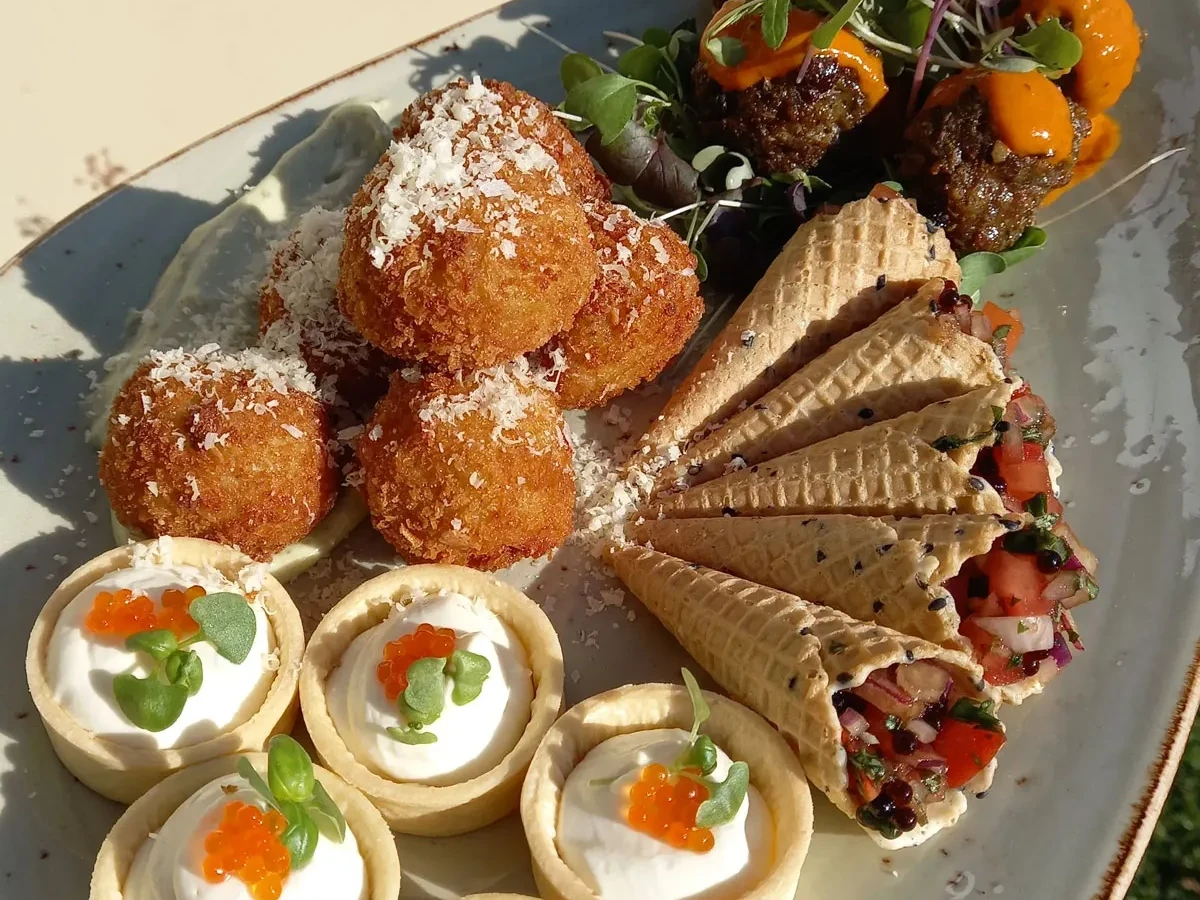
Comfort food tends to work well later in the evening because it is familiar, satisfying and easy to enjoy after several hours of celebrating. The best options are substantial enough to give guests a boost without feeling like a second formal meal.
Gourmet burger sliders are a popular choice because they are easy to serve and simple for guests to eat while mingling. A taco station can also work well for a relaxed reception, giving guests the opportunity to choose their preferred fillings and toppings. These options can often be adapted to suit vegetarian, gluten-free and other dietary requirements. Food Standards Australia New Zealand provides further information about managing food allergies when dining out.
The most suitable option will depend on the style of the wedding, the number of guests expected to stay late and the facilities available at the venue. Keeping the menu focused helps ensure the food can be served efficiently and enjoyed without interrupting the flow of the evening.
Handheld Options That Are Easy to Serve
Guests are often holding a drink, chatting or moving between the dancefloor and tables by the time late-night food is served. For this reason, smaller handheld items and simple stations are usually the most practical choices.
Burger sliders are easy to circulate and can be enjoyed without cutlery. Sushi and sashimi bites can provide a lighter option for couples who want something fresh and easy to eat. Taco stations can add an interactive element while still keeping the service relaxed and informal.
Venue logistics should be considered early. Some late-night snacks can be circulated on trays, while others may require a dedicated station, additional preparation space or service staff. Choosing an option that suits the venue helps keep the service smooth and avoids unnecessary complexity late in the evening.
Sweet Late-Night Options
Late-night food does not always need to be savoury. Some couples prefer to finish the celebration with a sweet option or serve a dessert-style addition alongside a more substantial snack.
A doughnut wall can create a relaxed and playful feature that guests can enjoy throughout the later part of the reception. Milk and cookies can also provide a nostalgic finishing touch, particularly for couples looking for a simple option that feels a little different from a traditional dessert course.
Sweet options can work well on their own when dinner has been substantial, or they can be paired with a savoury item for guests who want something more filling after time spent on the dancefloor.
How Much Late-Night Food Should You Order?
Late-night food does not need to match the volume or formality of the main meal. Most guests will treat it as a snack rather than a second dinner, and some may have already left by the time it is served.
The right quantity depends on the menu, the timing of dinner, the length of the reception and the number of guests expected to stay until the end. A wedding with a younger guest list, extended beverage service and a busy dancefloor may require more food than a shorter reception where guests begin leaving earlier.
Adjust the Quantity to Suit the Menu
Portion planning should reflect the type of food being served. A more substantial option, such as a burger slider, may require fewer pieces per person than smaller items such as sushi bites.
The service style also matters. Guests may eat differently when food is circulated on trays compared with an open station where they can return for additional servings. Your caterer can help determine a suitable quantity once the event schedule, guest numbers and menu format have been confirmed.
Factor in Dinner Timing and Beverage Service
The longer the gap between dinner and late-night service, the more likely guests are to appreciate an additional snack. If the main meal finishes early and the reception continues for several hours, serving late-night food closer to the final part of the evening can help maintain energy levels.
Extended beverage service can also influence demand. Guests who have spent several hours dancing and enjoying drinks may be more likely to want something substantial before the reception ends.
How Can You Include Late-Night Food Without Overspending?
Late-night catering does not need to place unnecessary pressure on the wedding budget. A simple menu, realistic quantities and an efficient service style can create a memorable addition without the cost of another formal course.
Keep the Menu Focused
Late-night food does not need to involve a large selection. One or two well-chosen options can provide better value than an extensive spread and make the service easier to manage.
A gourmet burger slider station, taco station or circulating selection of sushi bites can create a memorable addition without turning the late-night service into another full meal. Couples looking for a sweet option could also consider a doughnut wall or milk and cookies.
The best choice is one that suits the style of the wedding, complements the earlier menu and can be served efficiently at the venue. A focused menu can reduce waste while still giving guests something enjoyable to look forward to later in the evening.
Serve Food at the Right Time
Late-night food should arrive when guests are ready for it. Serving it too early can make it feel unnecessary, while serving it too late may mean many guests have already left. A carefully planned wedding catering timeline helps ensure the snack service fits naturally around dinner, formalities and time spent on the dancefloor.
For receptions ending around midnight, a service window between approximately 10:30 pm and 11:30 pm often works well. The best timing will depend on the dinner service, formalities, entertainment schedule and venue requirements.
Choose a Practical Service Style
The style of service can have as much impact on cost as the ingredients themselves. A compact station or tray-passed service is often more efficient than an interactive setup requiring additional equipment, preparation space and staff.
Handheld items served in cones, small trays, boxes or paper-lined baskets can reduce the need for extra crockery, cutlery and hire items. They also make it easier for guests to enjoy a snack without leaving the dancefloor for long.
Is Late-Night Food the Right Choice for Your Wedding?
Late-night wedding food is most worthwhile when it serves a clear purpose within the reception. Long celebrations, energetic dancefloors, extended beverage service and a significant gap between dinner and departure can all justify adding a carefully planned snack.
The most successful late-night menus are rarely the most elaborate. A small number of familiar, satisfying items served at the right time can keep guests comfortable, support the flow of the evening and create a memorable final touch without stretching the budget unnecessarily.