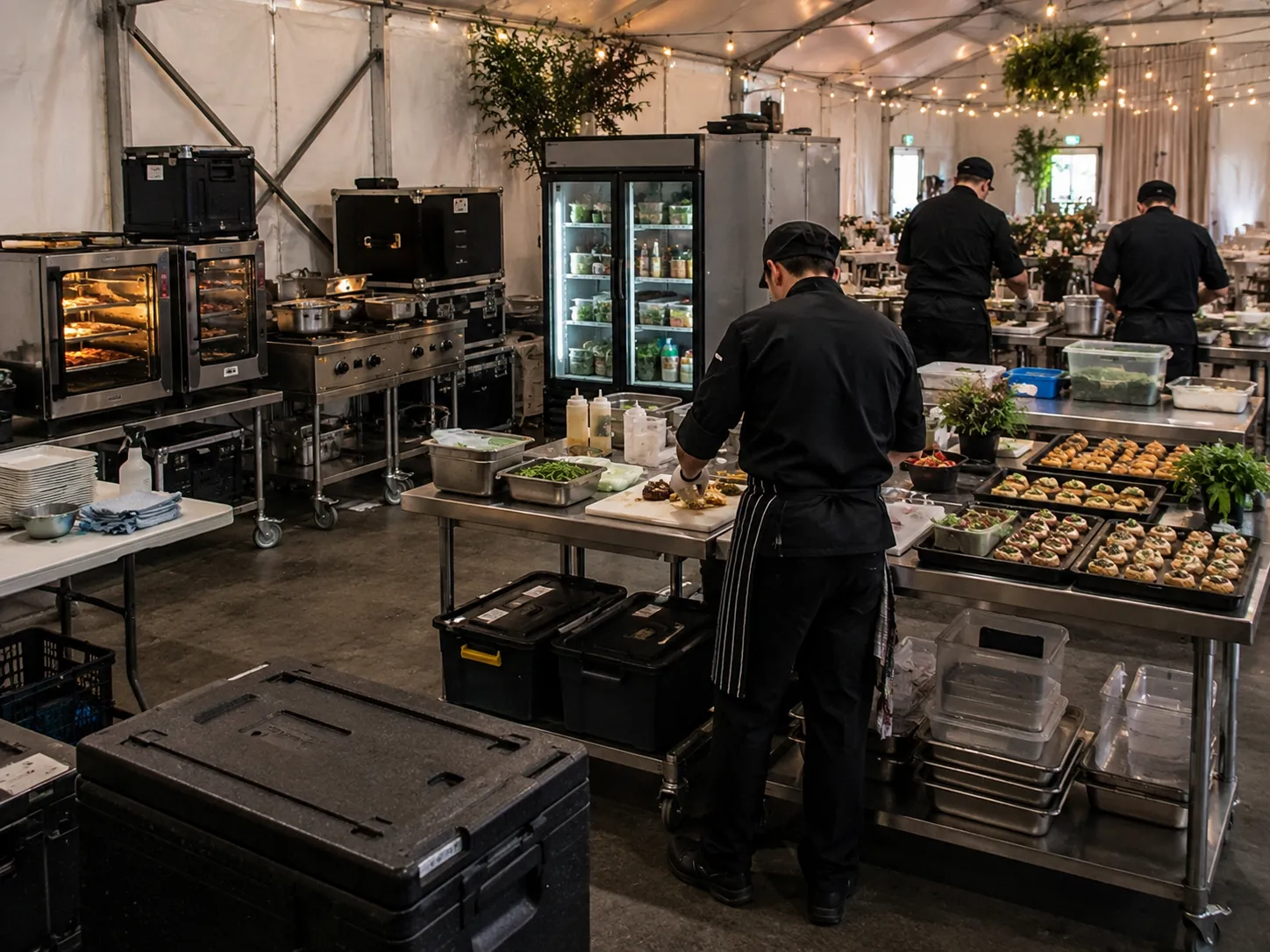
Yes, in many cases we can cater successfully at a venue without a commercial kitchen. For catering in Melbourne, the absence of a built-in kitchen does not automatically rule out a private property, hall, warehouse, garden venue or other unique event space. What matters is whether there is suitable space for us to work, reliable access to power and the right setup for your chosen menu and service style.
At Essential Catering & Events, we can bring mobile kitchen equipment, including ovens, when a venue does not have a kitchen available. We simply need to understand the site in advance and have an allocated area with suitable power. Where additional cooking equipment is required, the associated costs are itemised in your custom quotation.
The venue still needs to support safe, efficient food preparation and service. Access, refrigeration, water, preparation space and waste arrangements can all affect what is practical. Your menu is important too. A venue with limited facilities may be very well suited to finger food, a buffet, grazing stations, street food or shared feasting, while a more intricate plated menu may require additional infrastructure.
What Space, Power and Access Does a Caterer Need?
There is no single list of requirements that applies to every event. What we need depends on your guest numbers, menu, service format and the facilities already available at the venue.
When we assess a venue, we look beyond whether it has a room labelled "kitchen". We consider where food can be prepared or finished, where equipment can be positioned, how our team will move between the catering area and your guests, and how easily we can bring everything into and out of the property.
Space Requirements for a Temporary Catering Area
If there is no commercial kitchen, we need an appropriate back-of-house area where our team can work safely without interfering with your guests.
The amount of space required changes according to the menu. A grazing station or straightforward buffet generally has different requirements from plated dining involving several courses and more extensive preparation.
For more involved catering, practical requirements can include refrigeration, bench space, preparation and plating areas, handwashing facilities and somewhere to manage waste. Not every event needs every facility, which is why we review the menu and venue together rather than applying the same setup to every function.
The catering area should also be positioned so our team has a practical path to the dining or service space. A beautiful venue can become difficult to work in if food has to be carried a long distance, through crowded guest areas or up and down unsuitable stairs.
Power and Equipment Considerations
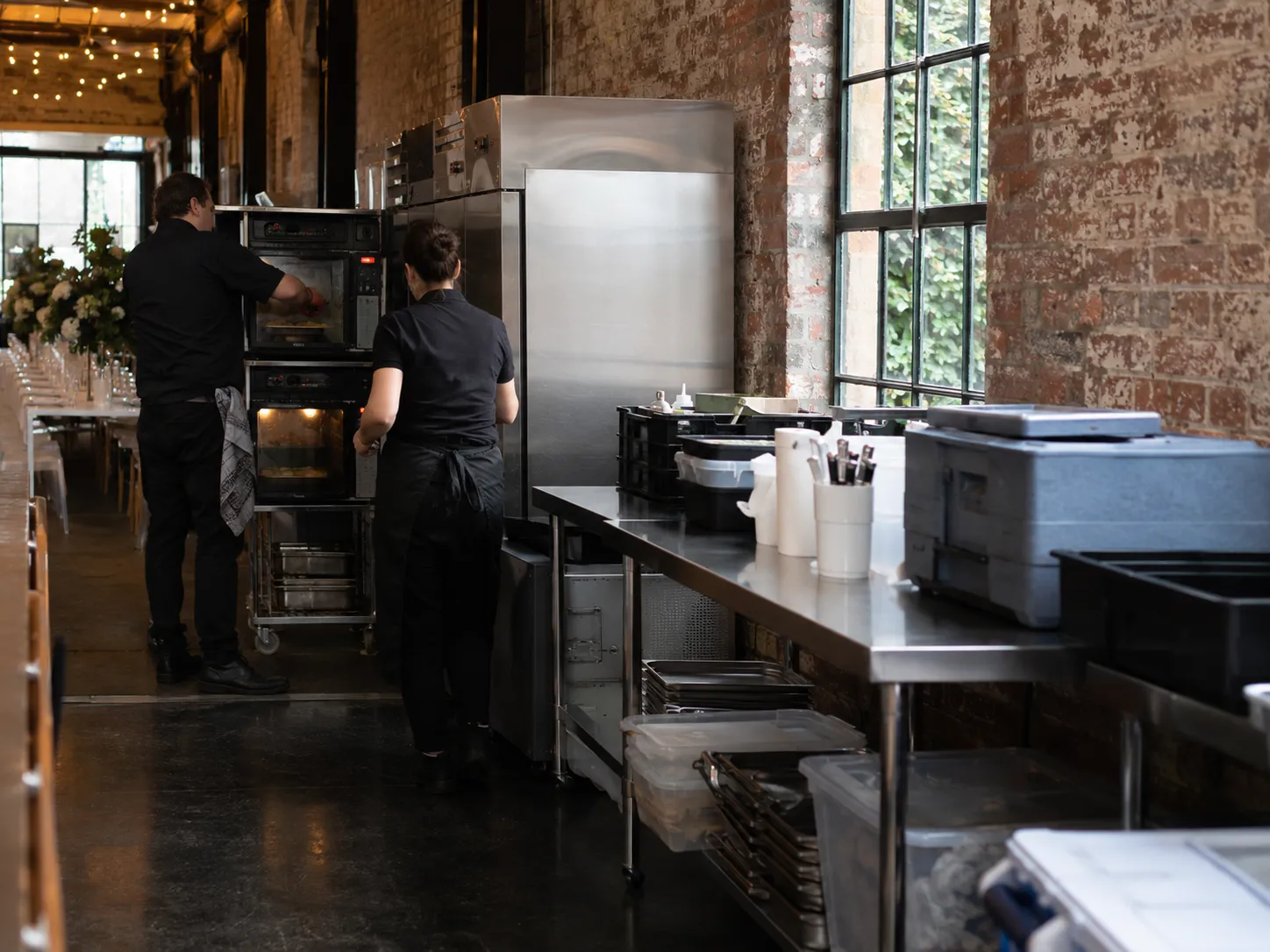
Power is particularly important when we are bringing mobile kitchen equipment to your venue. Our venue information confirms that we can bring mobile equipment, including ovens, where a kitchen is unavailable, provided there is an allocated working area with access to power.
Where gas-powered catering equipment is used, gas and energy safety at events also needs to form part of the site setup.
The exact electrical requirements depend on what needs to operate during your event. More intricate catering may require ovens or stovetops, refrigeration, warming equipment and appropriate lighting or preparation areas.
This is why it helps to establish the venue's facilities before finalising the menu. If the available infrastructure is limited, we can consider whether a different menu or service format would make better use of the space rather than unnecessarily complicating the setup.
Access, Deliveries and Waste Management
Loading and access can have just as much impact on catering as the kitchen itself.
Before the event, it is useful to confirm parking or loading arrangements, stairs or lift access, the distance between the unloading point and catering area, permitted bump-in and bump-out times and any venue restrictions that affect suppliers. Difficult access does not necessarily make catering impossible, but it can influence setup time, equipment requirements and staffing.
We also consider where used service items and waste can be managed without disrupting your guests. For staffed events, our team may need additional access time to unload food, equipment, beverage supplies and service items before guests arrive and to pack everything down afterwards.
The earlier we understand these details, the more accurately we can plan your event.
How Essential Catering Sets Up a Mobile Kitchen
When your venue does not have a usable commercial kitchen, we can create a practical mobile catering setup around the facilities available.
We do not simply arrive on the day and hope the space works. The menu, venue access, equipment and service requirements need to complement one another. Our current venue information specifically notes that we have a variety of mobile kitchen equipment available, including ovens, for venues without a kitchen. Additional equipment charges are detailed in the custom quotation rather than being assumed to be included in every booking.
Assessing the Space and Services Available
Planning starts with understanding your venue.
We consider the available catering or back-of-house space, access for our team and equipment, kitchen facilities if there are any, power, water, refrigeration and the distance between the preparation area and your guests.
The event schedule matters as well. A venue may have suitable physical space but allow only a short bump-in period, restricted loading access or limited time for pack-down. These details affect how we organise equipment and staffing and can also influence which menu is most practical.
For unfamiliar or less conventional spaces, sharing venue information early allows us to identify requirements before your event rather than discovering limitations during setup.
Building a Fully Functional Temporary Kitchen
A mobile setup does not need to reproduce every piece of equipment found in a permanent commercial kitchen. It needs to provide the equipment and workspace required for your particular menu.
Depending on the event, additional equipment may include ovens or portable convection equipment, refrigeration or cool-room capacity, bain-maries or warming cabinets and portable preparation benches. These are among the additional kitchen and heating requirements identified in our own event-planning guidance for venues without commercial kitchens.
We then match the setup to the way the food will be served. Finger food requires space for assembling and sending trays into the room. A buffet needs room for food to be prepared, held appropriately and replenished. Shared feasting and plated dining require organised preparation and service areas so courses can leave the kitchen at the right time.
This approach allows us to bring only what your event genuinely requires rather than adding unnecessary equipment and complexity.
Managing Power Water and Food Safety
Food safety remains important regardless of whether we are working from an established venue kitchen or a temporary catering area.
The facilities required vary according to the menu, but more involved staffed catering may need reliable power, running water, handwashing facilities, refrigeration, bench space, preparation and plating areas and suitable waste disposal.
We also plan menus and service around what the venue can realistically support. Limited kitchen facilities do not automatically prevent professional catering. In some cases, food can be prepared largely off-site and then finished, heated, assembled or served using the appropriate equipment at your venue.
By working through these requirements before the event, we can create a practical setup that supports both food safety and smooth service.
Which Menus Suit Venues With Limited Kitchen Facilities?
One of the biggest advantages of working with our broad range of menus is that we can choose a catering style that suits both your event and your venue.
Our current Melbourne catering menus include Finger Food, Buffet, Grazing Stations, Street Food, Feasting and Plated Dining, as well as options for corporate catering, breakfasts, boardroom lunches and other occasions.
A venue without a full commercial kitchen may still accommodate roaming canapés, buffets, grazing stations, street-food menus or shared dining. The important part is designing the service around the facilities that are actually available. When choosing your catering style, it is also worth considering your guest numbers, venue layout, atmosphere and the way you want guests to move through the event.
Best Styles of Service for Minimal Kitchens
Finger food can be particularly flexible for venues with limited back-of-house infrastructure. Our current Finger Food menu includes both cold and hot selections, premium finger food and more substantial items, with service options ranging from 1.5 hours through to a more plentiful three-hour offering.
Buffet catering can also work well because food can be organised for efficient service rather than requiring every plate to be assembled individually. Our current Buffet menu combines options such as finger food on arrival, hot main dishes, sides and desserts, with service formats ranging from two to three hours depending on the courses selected.
Grazing Stations are another option where the venue and occasion suit a relaxed style. Our grazing menus are presented using buffetware and arranged as stations for guests to enjoy throughout the event.
Shared feasting can also be considered. With our Feasting Menu, courses are served on platters at the table, giving your guests variety while creating an interactive, communal style of dining.
Menu Items That Work Without a Full Kitchen
Rather than restricting your event to a generic list of foods that supposedly "travel well", we prefer to look at our actual menus and determine what will work best at your venue.
Our Finger Food menu, for example, includes cold selections as well as hot canapés and substantial dishes. Our Buffet menu includes hot mains, artisan-style salads, vegetable sides and desserts, while our Feasting Menu combines shared mains, sides and optional entrée or dessert courses.
This variety gives us room to plan around the venue. If kitchen infrastructure is limited, we can place greater emphasis on items that can be efficiently prepared, held and served with the equipment available.
It also means you do not necessarily need to compromise on the style of your event simply because your venue has a small kitchen or no conventional kitchen at all.
Menus That Are Difficult in Low-Infrastructure Venues
More intricate plated dining generally places greater demands on the catering area because dishes depend on coordinated preparation, temperature and presentation.
Our Plated Dining menu is a formal service in which guests receive a choice of two dishes served alternately. Depending on the courses selected, current service periods range from two to three hours.
The menu itself includes carefully composed entrées, mains and desserts, so suitable preparation, plating and service areas are important.
That does not mean plated dining is automatically impossible in a venue without a built-in commercial kitchen. Our own planning guidance notes that staffed catering can be adapted to different levels of kitchen infrastructure. However, intricate plated menus may require reliable power, ovens or stovetops, running water, refrigeration, bench space and dedicated preparation and plating areas.
If the venue cannot comfortably support those requirements, we may recommend finger food, buffet, grazing, street food or shared feasting instead. The aim is to choose an option that can be delivered well in the space you have.
What Additional Equipment and Setup Costs Should You Allow For?
A venue without a commercial kitchen can involve additional costs because more equipment, transport, setup time or staffing may be needed.
When booking a caterer, it is worth looking beyond the food price and confirming the staffing, equipment, setup and other inclusions required for your venue.
We do not assume those requirements are the same for every event. Our venue information confirms that where additional cooking equipment is needed because there is no kitchen available, the charges are itemised in your custom quotation.
This gives you a clearer picture of what your particular venue requires before the event.
Cooking, Refrigeration and Food Holding
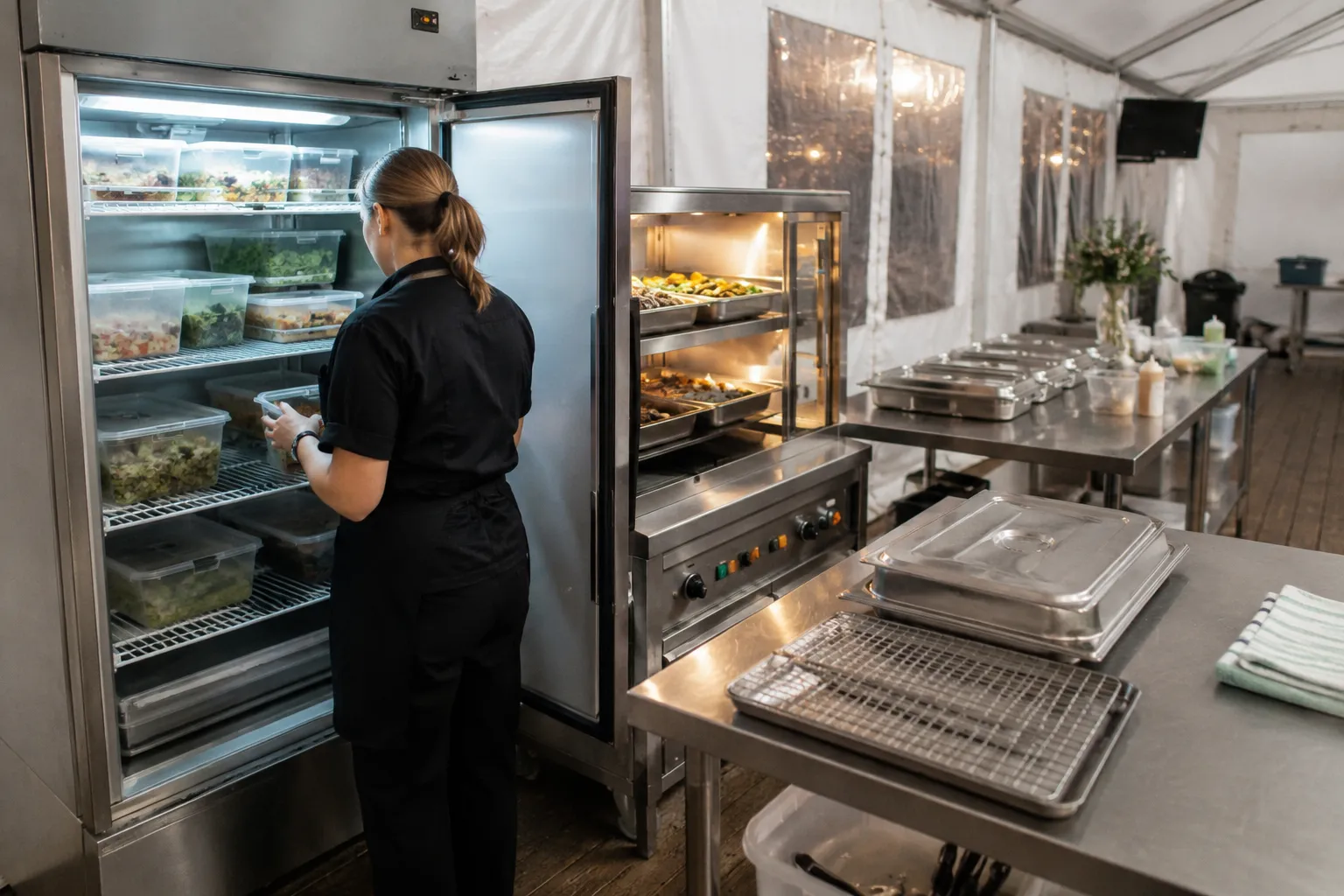
Additional kitchen requirements can include ovens or portable convection units, refrigeration or cool-room capacity, bain-maries, warming cabinets and preparation benches. Exactly what is required depends on the menu, guest numbers and existing facilities.
Appropriate refrigeration and hot-holding equipment also helps maintain safe food temperatures throughout preparation and service.
There is an important difference between a venue that has no kitchen but provides reliable power, refrigeration and a useful preparation room, and a completely blank space where almost all back-of-house infrastructure needs to be supplied.
This is one reason it is worth discussing catering before committing to an unconventional venue. Understanding these requirements early gives you a more realistic view of the overall event budget.
Prep Space, Warewashing and Front-of-House Setup
Equipment costs are not limited to cooking appliances.
Depending on the package and venue, you may also need to consider crockery, glassware, cutlery, buffetware, service equipment and the setup required for food stations or bars. These items are not necessarily included with every style of catering, so we confirm what is required during planning.
Inclusions also vary between our menus. For example, our current Finger Food menu includes a qualified chef, crockery, cutlery, required buffetware and napkins, while our Buffet and Feasting menus include a qualified chef, crockery, cutlery, place-setting setup and napkins. Waiting staff, additional equipment fees and surcharges can vary depending on the location and circumstances.
Looking at the complete service rather than food alone makes it easier to compare options accurately.
Power, Gas, Transport and Staffing
Venue logistics can influence how much labour and equipment your event requires.
Long distances between the loading area and catering space, stairs, restricted lifts, limited bump-in times or difficult access can increase the amount of setup and pack-down work involved. Staffed catering also requires enough time for our team to unload food and service equipment before your guests arrive and pack everything away afterwards.
Staffing depends on the service you choose. A staffed event may involve chefs, waitstaff, bar staff, kitchen assistants or supervisors, with the final requirements influenced by guest numbers, event duration, venue layout and service format.
For this reason, we recommend looking at your venue, menu and service requirements as one complete plan rather than choosing each element separately.
A venue without a commercial kitchen does not have to limit what you can create. With suitable space, power and access, the right equipment and a menu designed for the venue, we can cater in many locations that do not have a traditional kitchen. From finger food and grazing stations to buffets, shared feasting and, where the facilities allow, plated dining, we can help you choose an approach that suits both your guests and the practical realities of the space.
If you are considering an unconventional venue for your wedding, corporate function or private event, contact Essential Catering & Events or request a quote. We can review the venue requirements with you and help plan a catering setup that works comfortably from preparation through to pack-down.