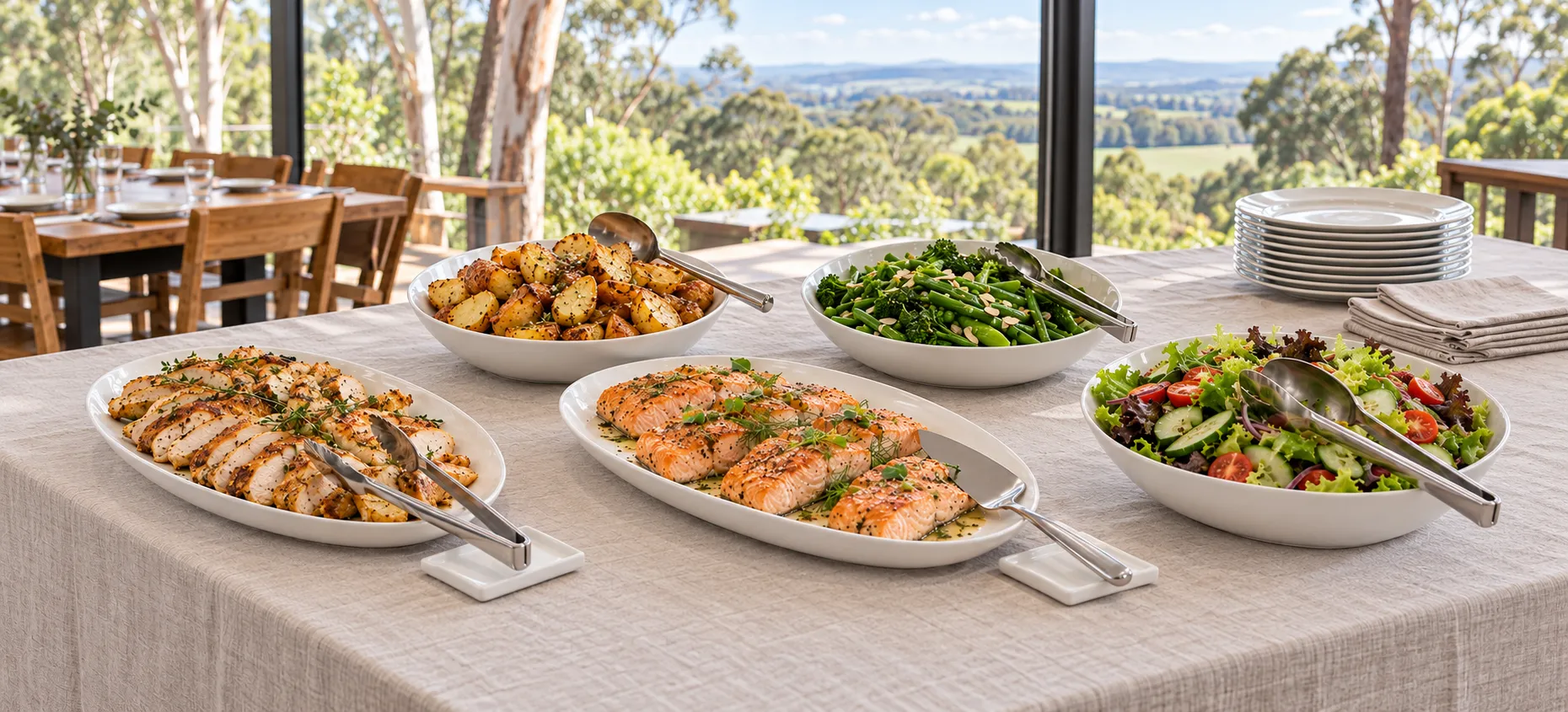
You can build a party menu that welcomes adventurous and cautious eaters by combining familiar favourites with a few distinctive flavours. The aim is to give your guests appealing choices without making every dish a challenge or creating separate menus for different tastes.
At Essential Catering & Events, our private event catering in Melbourne includes finger food, buffets and formal dining options. We can help you choose a style that suits your celebration, then balance the selections around the food you love and the preferences of your guests.
How Do I Make Adventurous Food Feel Welcoming?
A recognisable ingredient or preparation gives guests a comfortable starting point. From there, an interesting accompaniment can introduce something new without making the whole dish feel unfamiliar.
When discussing your menu with us, explain which flavours you would like to explore and which foods your guests already enjoy. That helps us suggest dishes with the right balance of familiarity and interest.
Pair an Unfamiliar Flavour With a Recognisable Base
Our feasting menu offers examples of this approach, including grilled chicken thigh with crisp prosciutto, sage and vincotto, and salmon fillet with thyme, roquette, fennel and citrus dressing. The main ingredients are recognisable, while the accompaniments give each dish its character.
Think about preparation as well as ingredients. A guest who enjoys roasted vegetables may be less comfortable with the same vegetables served raw. Tell us about those preferences so we can help you assess the complete dish, rather than choosing by its main ingredient alone.
Clear descriptions also make food more approachable. Knowing what a dish contains and how it is prepared lets guests decide whether they would enjoy trying it.
For guests with food allergies, accurate allergen information is also essential when discussing menu choices.
Introduce One Surprising Element Rather Than Several
If your guests are hesitant about unfamiliar food, choose where you want the sense of discovery to come from. It might be a particular spice, an unusual accompaniment or a different preparation.
You do not need to introduce all three at once. A familiar main ingredient can provide enough reassurance when its sauce or seasoning is the more adventurous part.
We suggest looking at the whole combination before deciding whether a dish suits your group. Something that looks familiar may contain chilli or a sharp dressing, while an unfamiliar name may describe flavours your guests already enjoy. Ask us about the components that matter to you.
Familiar Dishes Can Still Feel Special
Familiar food deserves a place on your menu because it is enjoyable, rather than simply because someone might avoid the more adventurous selections. Thoughtful accompaniments and contrasting textures can give recognisable favourites plenty of appeal.
Use Contrast and Presentation to Lift Simple Food
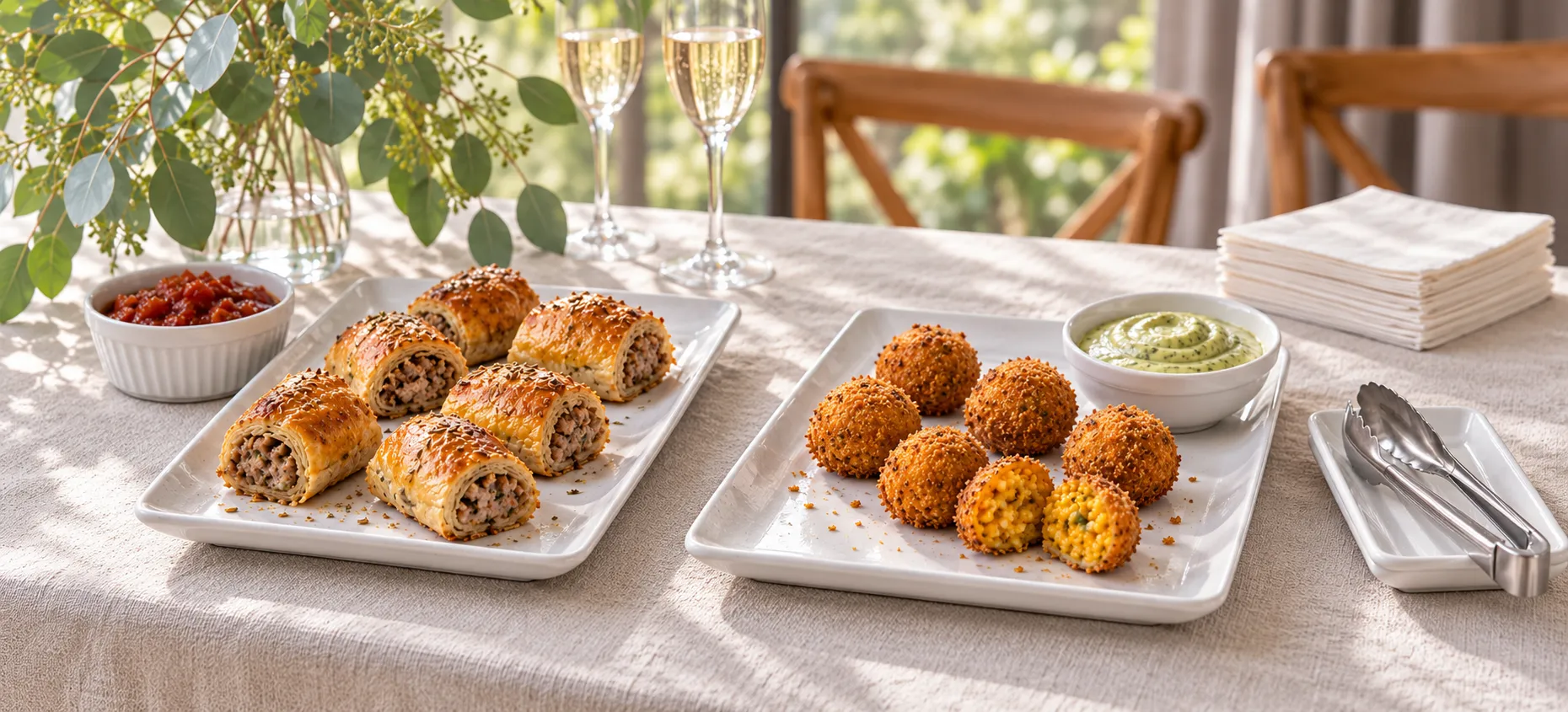
Our finger food menu includes pork and fennel sausage rolls with caramelised onion and tomato relish, alongside pumpkin, sage and lemon arancini with pecorino and basil aioli. Both offer recognisable starting points with accompaniments that add interest.
When reviewing your options, consider what makes each bite satisfying. A crisp exterior, a soft centre or a fresh accompaniment can provide variety without relying on strong heat or unfamiliar ingredients.
Let us know if texture is particularly important to your guests. Enjoying crunchy food but disliking unexpected pieces in a smooth filling is a useful distinction when narrowing your selections.
Choose Appealing Favourites Rather Than a Token Fallback
A helpful test is to ask whether you would still choose the dish if every guest enjoyed adventurous food. If you would, it is likely to be a worthwhile part of the menu.
Our finger food selections include traditional beef pies with tomato relish as well as options such as kingfish ceviche with rice puff and yuzu. You can include familiar favourites alongside more distinctive choices without treating either as an afterthought.
Avoid assigning dishes to children, older relatives or “fussy” guests. Preferences vary between individuals, and everyone should feel comfortable choosing food they enjoy.
How Can I Offer Bold Flavours Without Overwhelming Guests?
Start by identifying what you mean by bold. Chilli heat, fragrant spices, acidity, smokiness and richness create different experiences, so a request for “interesting food” needs a little explanation.
The more clearly you describe those preferences, the easier it is for us to help you compare suitable selections.
Separate Chilli Heat From Other Kinds of Flavour
A guest who avoids chilli may still enjoy herbs, garlic or aromatic spices. Someone who enjoys hot food may dislike a pronounced smoky flavour or a strongly acidic dressing.
Our menu descriptions identify ingredients such as chilli, sriracha, wasabi and chipotle, giving you useful details to discuss with us. For example, macaroni cheese bites may sound entirely familiar, but our version includes sriracha and pickled cucumber.
Tell us what your guests actually enjoy. “They like fragrant spices but avoid chilli heat” gives us a clearer brief than “nothing too strong”. Similarly, enjoying a squeeze of lemon does not necessarily mean someone likes a sharply dressed salad.
Discuss Strong Sauces and Toppings Served Separately
If an accompaniment is your main concern, ask us whether it can practically be served separately. Where suitable, this may allow guests to decide how much they want.
Some sauces and seasonings are part of the cooking process or essential to the finished dish. Serving them separately may not be possible, and choosing another menu item may produce a better result.
We can discuss the proposed dish with you before you make your selections. Confirm any agreed changes rather than assuming that a sauce, garnish or seasoning can be removed on the day.
A Cohesive Menu Needs Contrast, Not Endless Choice
A longer menu does not automatically offer more variety. Several dishes can use different ingredients yet deliver the same rich, spicy or heavily dressed experience.
Choose your service style first, then give each selection a clear purpose. Our menus include shared feasting, buffets, finger food and plated dining, each offering a different way to organise the meal.
Give Each Dish a Different Role
Think in terms of a familiar favourite, a more adventurous highlight and supporting dishes that bring freshness or a different texture.
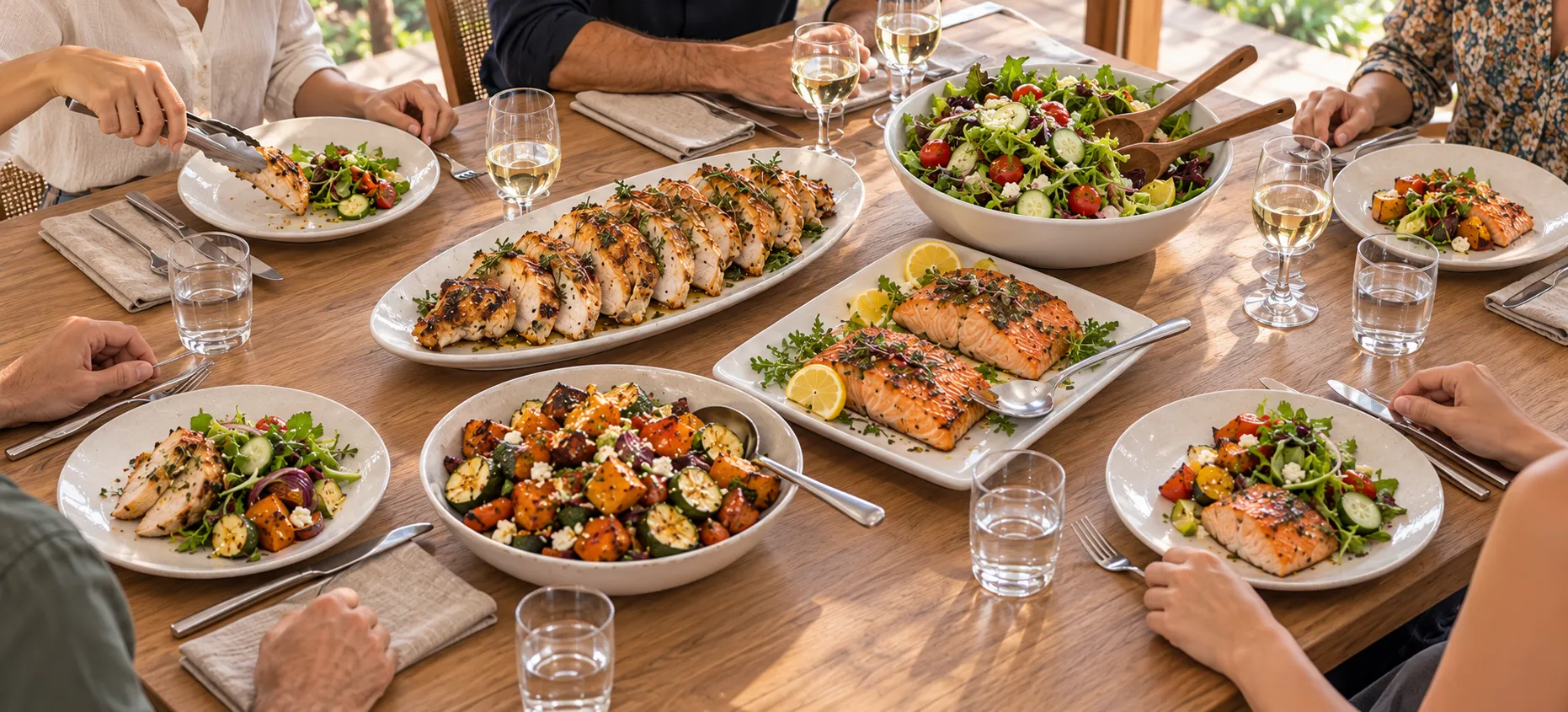
For a buffet, you might discuss pairing our Moroccan spiced chicken thigh with crispy-skinned salmon, then selecting contrasting accompaniments. Our buffet menu provides a choice of two hot dishes and three sides, including rosemary roasted chat potatoes, seasonal greens with lemon zest and salad options. These give you a practical framework for building variety without adding unnecessary dishes.
How guests receive the food matters too. Our feasting menu is served on platters at the table, while our plated dining menu uses two selected dishes served alternately. If individual choice is central to your plans, discuss that with us before settling on the format.
Avoid Repeating the Same Dominant Flavour
Read your proposed menu for flavour and texture as well as ingredients. Several creamy dishes may feel repetitive, while multiple chilli sauces can leave guests who avoid heat with limited choices.
If your favourite dish is particularly rich, look for a supporting selection that feels fresher. If one dish features a strong dressing, consider whether another needs a similarly sharp accompaniment.
Review the package structure before adding more food. Our finger food options include five selections over a 1.5-hour service period, or eight or ten selections over two hours. Choosing a balanced mix within the appropriate package is more useful than increasing the number of items simply to cover uncertainty.
What Should I Tell My Caterer About Our Guests’ Tastes?
Tell us what you would love to serve, what your guests usually enjoy and which preferences apply to a significant part of the group. A few concrete examples are more helpful than describing everyone as adventurous, traditional or difficult to please.
Include your guest numbers, venue and event timing so we can consider your flavour preferences alongside the practical requirements of service.
Share Examples of Foods Your Guests Enjoy
You might explain that your guests enjoy roast meats and vegetables, prefer crisp textures or like aromatic spices without much chilli. Mention any ingredients or preparations that several people tend to avoid.
Be clear about how widely a preference applies. One guest disliking seafood calls for a different conversation from most of your guests avoiding it.
Keep preferences separate from allergies and other dietary requirements. Better Health Channel explains the difference between food allergy and intolerance, helping you provide clear details about your guests’ needs. We offer vegetarian, vegan and other dietary options, but our kitchen handles ingredients including gluten, dairy, nuts, shellfish, soy and eggs, and we cannot guarantee dishes are free from allergens. Tell us about dietary needs early so we can discuss suitable selections and the relevant limitations.
Identify Your Must-Have Dish and Where You Can Compromise
If a particular dish or flavour matters to your celebration, start there. Explain whether your priority is the main ingredient, its preparation or the accompaniment, and tell us which details you are happy to reconsider.
Share your venue arrangements at the same time. For example, our buffet package includes a qualified chef, crockery, cutlery, place setting setup and premium disposable napkins. Waiting staff and additional equipment may incur separate charges depending on the location and circumstances, so these should be considered alongside your menu.