
Choosing between drop-off catering and staffed catering is one of the most important decisions when planning an event. Whether the occasion is a corporate function, private celebration, wedding or large-scale gathering, the catering format influences service, guest experience, event flow and the amount of responsibility placed on the host.
For those arranging catering in Melbourne, the right option may be anything from a boardroom lunch delivered ready to serve to a fully staffed celebration with roaming canapés, shared feasting plates, beverage service and professional event support. Essential Catering & Events offers flexible catering solutions that can be adapted to the occasion, venue, guest numbers and preferred level of service.
This guide explains how drop-off and staffed catering differ, where each option works best and the factors that should influence the decision. By considering the menu, venue facilities, dietary requirements, timing, budget and host involvement, it becomes easier to select a catering style that supports the event and creates an enjoyable experience for guests.
What Is Drop-Off Catering?
Drop-off catering involves professionally prepared food being delivered to an office, venue or private residence for the host and guests to serve themselves. The catering team manages menu planning, preparation and delivery, while the client usually takes responsibility for arranging the food, serving guests, monitoring quantities and cleaning the service area afterwards.
It is designed for hosts who want fresh, professionally prepared catering without requiring chefs or waitstaff to remain at the event. Depending on the menu, food may arrive ready to serve or require simple reheating before it is placed out for guests.
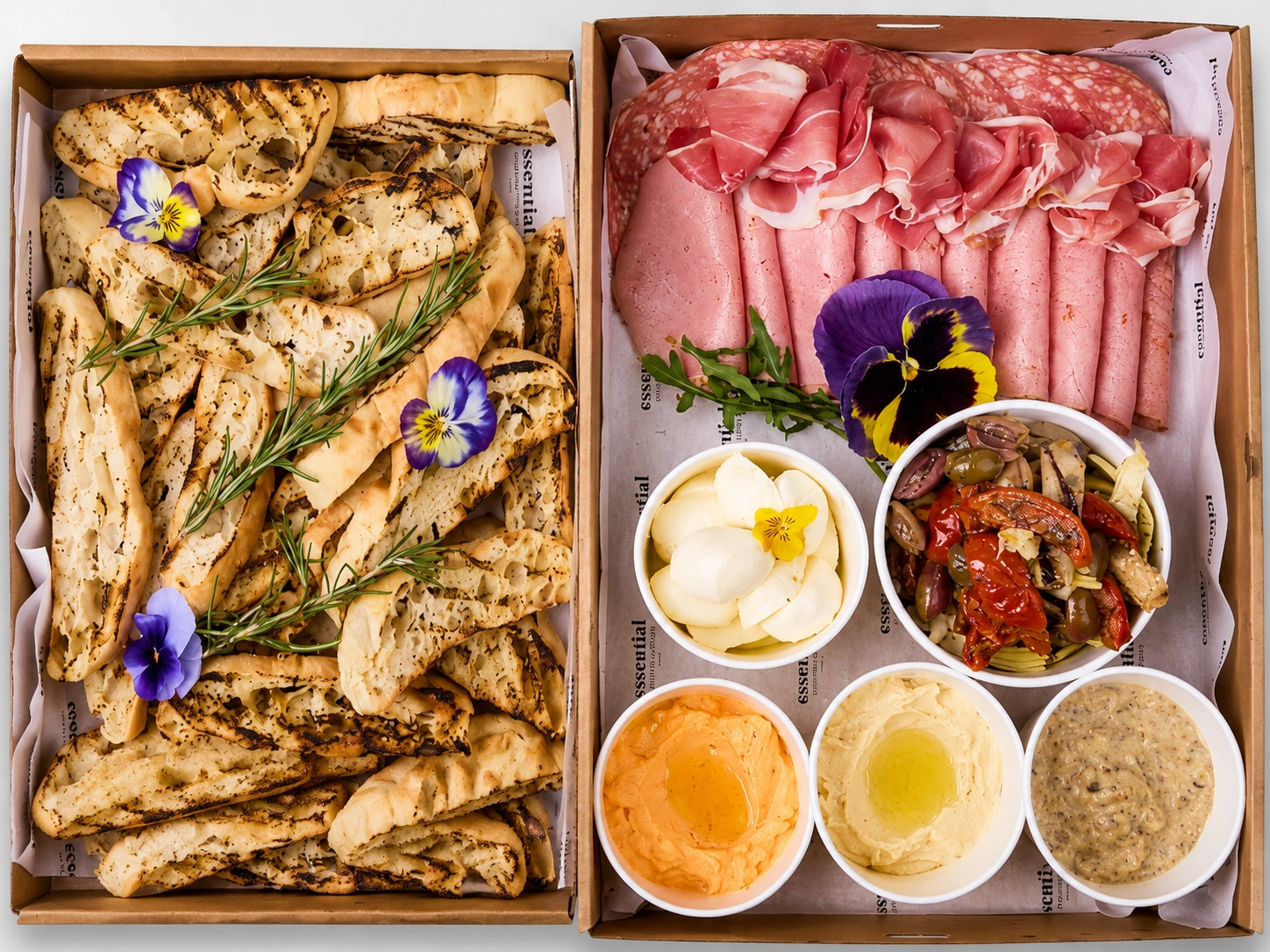
Essential Catering & Events provides drop-off catering in recyclable disposable boxes and packaging for convenient setup and clean-up. Items that require heating may be supplied in foil trays with appropriate serving or reheating instructions. Additional service equipment can also be arranged when required, rather than being automatically included in every order.
Drop-off catering is particularly useful for events where convenience, flexibility and cost control are priorities.

How Drop-Off Catering Works
The process begins with choosing a menu based on the event type, number of guests, service time and dietary requirements. The catering team prepares the order in advance and arranges delivery for an agreed time.
Drop-off menus may include:
- Breakfast selections
- Boardroom lunches
- Sandwiches and wraps
- Salads and shared platters
- Finger food
- Grazing selections
- Buffet-style dishes
- Individually portioned meals
- Vegan and vegetarian options
- Morning and afternoon tea
Cold platters and ready-to-eat items can usually be arranged and served shortly after delivery. Some hot selections may require brief reheating before service, so the host should confirm that suitable ovens, power or warming facilities are available.
Clear dietary labels can make it easier for guests to identify suitable options. However, the host or venue team remains responsible for setting up the catering area, placing out serving utensils, replenishing food and managing waste during the event.
When Drop-Off Catering Works Best
Drop-off catering works well when an event is informal, self-service is appropriate and the host has enough time or assistance to manage the food area.
It can be a suitable choice for:
- Corporate meetings and workshops
- Boardroom lunches
- Staff training days
- Client meetings
- Office celebrations
- Conferences with simple catering breaks
- Casual birthdays
- Baby showers
- Family gatherings
- Funeral and memorial gatherings
- Community functions
- Private events at home
It is also practical for venues with limited kitchen facilities because many menus are prepared off-site and designed to travel well. The venue may only need a clean service area, refrigeration for short-term storage and suitable facilities for any items requiring reheating.
Drop-off catering is not restricted to a particular guest number. It can work for both small and larger groups when the menu is designed for self-service and the venue has people available to manage setup, replenishment and clearing.
As guest numbers, service expectations or scheduling requirements increase, professional staff may be recommended to prevent queues, maintain presentation and reduce the workload placed on the host.
What Is Staffed Catering?
Staffed catering provides professional on-site support before, during and after an event. Rather than leaving the food entirely in the host’s care, chefs, waitstaff, bar staff or catering supervisors can manage the service according to the selected package.
The level of staffing can be adapted to the event. Some functions may require a complete catering team to manage setup, food preparation, service, beverages, clearing and pack-down. Others may only need one or two team members to supervise a buffet, circulate canapés or operate the bar.
This flexibility makes staffed catering suitable for occasions where service, timing and presentation are important but a large team may not be necessary.
What Staffed Catering Can Include
Depending on the event and package, a staffed service may involve:
- Setting up food and beverage areas
- Preparing or finishing dishes on site
- Circulating canapés
- Serving buffets or food stations
- Plating and serving seated meals
- Managing shared feasting menus
- Operating beverage and bar service
- Clearing crockery and glassware
- Monitoring food presentation and temperature
- Managing dietary meals
- Coordinating food service with speeches and formalities
- Packing down catering areas after the event
Equipment, tableware, serving pieces and display items may also be supplied or arranged depending on the package. These requirements should be confirmed during planning, as they are not necessarily included with every service.
Staffed catering allows hosts to spend more time with their guests instead of monitoring food, clearing tables or coordinating service.
When Staffed Catering Is Most Suitable
Staffed catering is often the better choice for events that are formal, extended, highly structured or logistically complex.
It is particularly suitable for:
- Weddings
- Engagement parties
- Milestone birthdays
- Anniversary celebrations
- Corporate functions
- Awards nights
- Charity events
- Product launches
- Conferences
- Office parties
- Formal dinners
- Large private celebrations
Events with speeches, presentations, entertainment or several stages of food service benefit from having a professional team on site. Staff can adjust service timing if the schedule changes, ensure hot food is served at the right temperature and manage guest requests throughout the event.
Staffed catering is also useful when presentation forms an important part of the experience. Weddings, galas, brand events and formal corporate functions often require consistent plating, styled food stations and attentive service that would be difficult for the host to manage independently.
Comparing Drop-Off and Staffed Catering
The most significant difference between the two formats is the level of support provided at the event.
With drop-off catering, the food is professionally prepared and delivered, but the host or venue team manages most of the service. With staffed catering, professional team members remain on site to manage some or all of the catering experience.
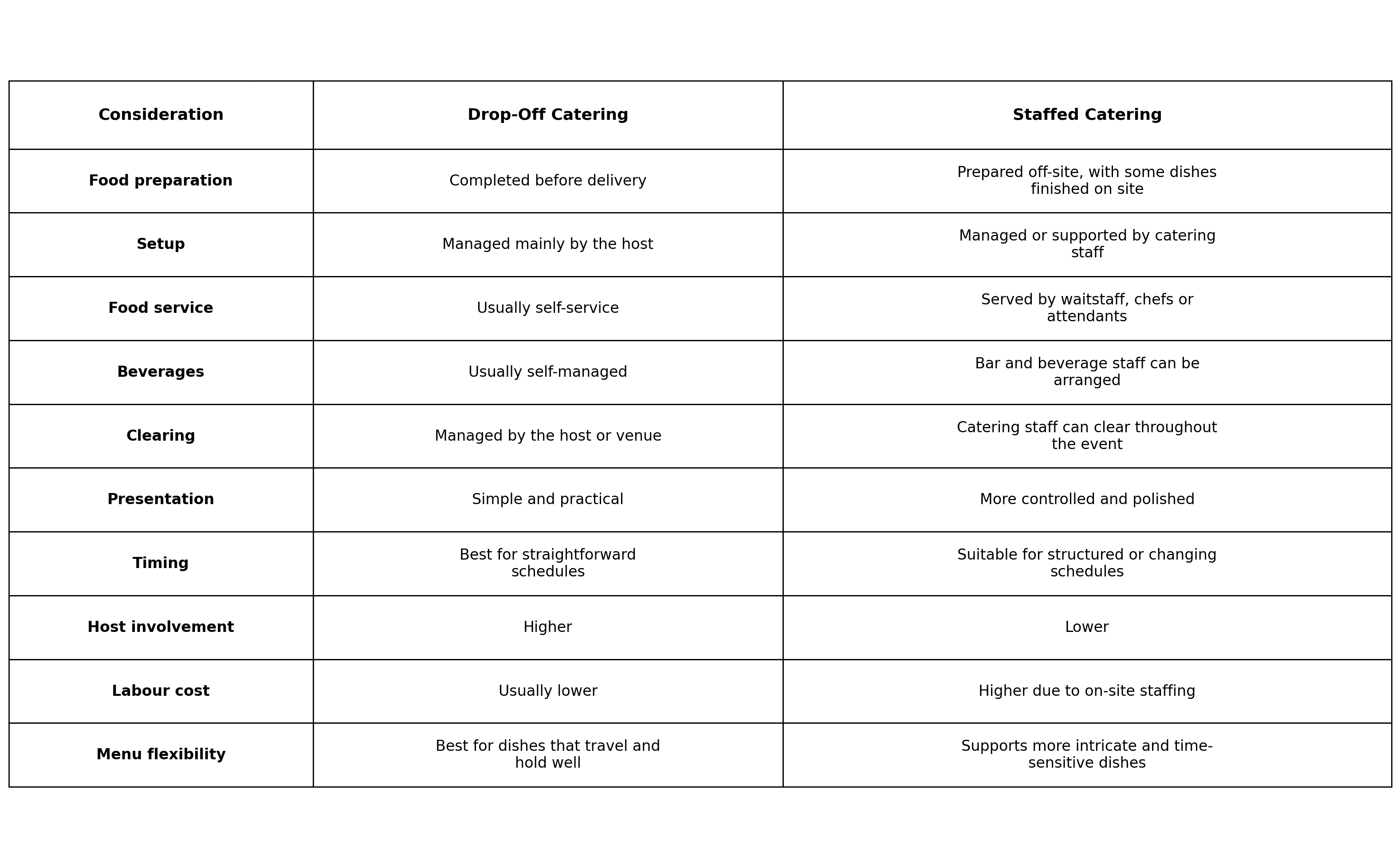
Neither format is automatically better. The right option depends on the atmosphere the host wants to create and the practical requirements of the occasion.
Menu Styles and Service Formats
Menu style is one of the strongest indicators of whether drop-off or staffed catering will work best. Some foods travel well and are easy for guests to serve themselves, while others rely on careful timing, on-site finishing or professional presentation.
Essential Catering & Events offers a broad range of menu formats, allowing the service style to be matched to the occasion rather than limiting clients to a basic choice between delivered platters and formal dining.
Menu Styles Suited to Drop-Off Catering
Drop-off catering works best with dishes that are easy to transport, arrange and serve. The food should remain appealing throughout the expected service period without requiring complicated plating or constant attention.
Suitable formats may include:
- Breakfast platters
- Morning and afternoon tea
- Sandwiches, rolls and wraps
- Boardroom lunches
- Salads and cold platters
- Grazing selections
- Finger food
- Shared buffet dishes
- Individual meal boxes
- Room-temperature dishes
- Vegan and vegetarian platters
Items that require reheating should be straightforward for the host or venue team to manage. Hot dishes need to hold their quality once warmed, while salads and cold items should be packaged to remain fresh until service.
Delicate garnishes, intricate plating and dishes that deteriorate quickly after being sauced are generally better suited to staffed service.
Menu Styles Suited to Staffed Catering
Staffed catering provides greater flexibility for dishes that depend on precise timing, temperature and presentation.
Suitable options can include:
- Plated multi-course dining
- Shared feasting menus
- Alternate-drop meals
- Roaming finger food
- Staffed buffets
- Carvery menus
- Grazing stations
- Street-food-style service
- Live or interactive food stations
- Conference delegate packages
- Beverage packages
- Bar service
Plated menus can include proteins, seafood, sauces and garnishes that are finished shortly before service. Shared feasting menus can be arranged and replenished by staff, while circulating canapés can be served at the ideal temperature rather than remaining on a stationary table.
Staffed catering also allows several formats to be used during the same event. A wedding, for example, might begin with roaming finger food, move into shared dining and finish with dessert stations or late-night snacks.
Setup and Presentation Requirements
Presentation affects how guests perceive the food and how comfortably they move through the venue.
Drop-off orders generally arrive in practical packaging designed for transport, convenience and straightforward service. Hosts may choose to serve food directly from the supplied trays or transfer it to their own platters and display pieces.
When managing the presentation independently, the host may need to provide:
- Tables for the food
- Serving platters
- Serving utensils
- Plates, bowls and cutlery
- Napkins
- Dietary labels
- Rubbish bins
- Risers or display pieces
- Heating or cooling equipment
Staffed catering provides greater control over setup and appearance. Depending on the package, the team may arrange food stations, prepare service areas, position platters, display dietary labels and monitor the presentation throughout the event.
Staff can also replenish food gradually rather than placing everything out at once. This helps the display remain fresh and inviting while reducing overcrowding around buffet or grazing areas.
For weddings, corporate launches and formal celebrations where the food needs to complement the décor or event theme, staffed catering often creates a more cohesive result.
Venue Access, Facilities and Equipment
Venue conditions can significantly influence the catering format. Access times, loading areas, kitchen facilities, power, water and storage should all be reviewed before the menu and service style are confirmed.
Delivery and Venue Access
For drop-off catering, the main considerations are:
- Delivery access
- Nearby parking or loading areas
- Stairs or lift access
- Distance between the vehicle and service area
- The permitted delivery window
- A contact person available to receive the order
- Space to arrange the food before guests arrive
Difficult access does not necessarily rule out delivery, but it may affect the setup time and the type of packaging or equipment that can be used.
Staffed catering generally requires a longer access period because the team may need to unload food, equipment, beverage supplies and service items before guests arrive. Bump-in and bump-out times should be confirmed with the venue, particularly when loading docks, service lifts or noise restrictions apply.
Kitchen Facilities, Power and Water
Drop-off catering usually requires fewer facilities. Many menus only need a clean food service area, refrigeration and access to an oven or warming equipment when reheating is required.
Staffed catering can be adapted to venues with different levels of kitchen infrastructure. Limited facilities do not automatically prevent professional service. The catering team may recommend a menu that is largely prepared off-site and can be served using appropriate warming, refrigeration or hired equipment.
More intricate plated menus may require:
- Reliable power
- Ovens or stovetops
- Running water
- Handwashing facilities
- Refrigeration
- Bench space
- Preparation and plating areas
- Waste disposal facilities
A venue without a full commercial kitchen may still support roaming canapés, buffets, grazing stations, street-food menus or shared dining. The menu simply needs to be designed around the available facilities.
Space for Service
The room layout must also support the selected service style.
Roaming waitstaff need enough space to circulate safely. Plated dining requires clear access between the kitchen, tables and service stations. Buffets need enough room to prevent long queues, while bar service requires an appropriate area for equipment, glassware and guest movement.
In a smaller or crowded venue, a staffed buffet, grazing table or partial service team may be more practical than formal plated dining.
Guest Numbers, Timing and Event Flow
Guest numbers matter, but they should not be considered in isolation. The menu, room layout, number of service points and level of assistance available can be just as important.
A drop-off order may work efficiently for a larger workplace gathering when there are several food stations and staff available to manage them. In contrast, a smaller formal dinner may still require professional service because several courses need to be plated and timed carefully.
As guest numbers increase, hosts should consider:
- Whether one buffet table will create long queues
- How dietary meals will be identified
- Who will replenish platters
- Who will clear used plates and glassware
- How food temperatures will be monitored
- Whether self-service suits the tone of the event
- Whether the host will have time to oversee catering
Adding staff can be worthwhile when the number of guests makes self-service difficult or when the host wants the event to feel more relaxed and organised.
Timing and Event Structure
Drop-off catering is usually best for straightforward events where food is served within a defined period. A meeting lunch, training day or casual celebration may only require the order to be delivered, arranged and enjoyed over one service window.
Staffed catering is more effective when the event includes several stages, such as:
- Pre-dinner drinks
- Roaming canapés
- Speeches
- Seated courses
- Presentations
- Dessert service
- Beverage service
- Late-night food
Professional staff can adjust the catering schedule when formalities run late or the event programme changes. They can delay plating, hold dishes safely and communicate with organisers so the food service remains coordinated with the rest of the event.
Host Involvement and Responsibilities
The amount of responsibility the host is willing to take on should be considered honestly.
Drop-off catering may require the host or an internal team to:
- Receive the delivery
- Check the order
- Reheat selected dishes
- Arrange platters
- Display dietary labels
- Set out tableware
- Replenish food
- Monitor serving areas
- Clear empty packaging
- Manage rubbish
- Clean the catering area
These tasks may be manageable for a workplace meeting or casual gathering. They can become more demanding during a wedding, formal celebration or corporate event where the host is also responsible for guests, speeches, suppliers and the programme.
Staffed catering transfers many of these responsibilities to the catering team. Even limited staffing can make a significant difference by managing a buffet, circulating food or clearing throughout the event.
Dietary Requirements and Guest Needs
Dietary planning is important for both drop-off and staffed catering.
Guest requirements should be provided as early as possible, including allergies, intolerances and preferences such as:
- Vegetarian
- Vegan
- Gluten-free
- Dairy-free
- Nut allergies
- Religious dietary requirements
- Other medically required restrictions
Drop-off catering can accommodate a variety of dietary needs when suitable meals are ordered and labelled clearly. However, the host must ensure the correct food reaches the appropriate guests and that serving utensils are not mixed between dishes.
Staffed catering provides greater control because the team can manage individually plated meals, communicate with guests and reduce confusion around buffet or shared service areas.
This can be particularly helpful at weddings, conferences and larger corporate events where several dietary requirements need to be managed discreetly and efficiently.

Cost Factors to Consider
Drop-off catering generally has a lower starting cost because on-site labour is limited. Pricing may be calculated per person, per platter or according to a set package.
The total cost can be affected by:
- Ingredient selection
- Menu complexity
- Number of dishes
- Guest numbers
- Dietary requirements
- Delivery distance
- Packaging
- Equipment hire
- Tableware
- Beverage requirements
While drop-off service may appear more economical, hosts should also consider the cost of purchasing disposable tableware, hiring equipment, arranging staff independently or asking employees and family members to manage the service.
Staffed catering includes additional labour costs for chefs, waitstaff, bar staff, kitchen assistants or supervisors. Staffing is often calculated according to the number of people required, the event duration and the service format.
Other factors may include:
- Setup and pack-down time
- Minimum staffing periods
- Late-night finishes
- Weekend or public holiday rates
- Equipment hire
- Glassware and crockery
- Linen
- Bar equipment
- Beverage packages
- Venue access restrictions
Comparing only the food price per person may not provide an accurate picture. A complete quote should consider everything required to deliver the intended guest experience.
Professional service can also improve portion control. Staffed buffets and plated meals make it easier to manage serving sizes, while self-service catering may require additional food to reduce the risk of dishes running out.
Combining Drop-Off and Staffed Catering
Some events do not need to use one catering format exclusively. A hybrid approach can provide professional service where it has the most impact while keeping other parts of the event simple and cost-effective.
A conference might use:
- Drop-off breakfast platters
- A staffed buffet for lunch
- Delivered afternoon tea
- Bar staff for an evening networking function
A wedding weekend could include:
- Drop-off grazing platters for a pre-wedding gathering
- Fully staffed catering for the reception
- Delivered breakfast or lunch for the following day
A corporate event may combine delivered food with a small service team responsible for setting up, replenishing the buffet and clearing afterwards.
Hybrid arrangements are particularly useful for:
- Multi-day conferences
- Corporate events with several sessions
- Wedding weekends
- Private celebrations held across several days
- Venues with limited in-house staff
- Events that combine formal and informal components
Selecting the appropriate service level for each part of the event helps control costs without compromising the moments that require a polished guest experience.
How Essential Catering & Events Can Help
Choosing between drop-off and staffed catering requires more than comparing menu prices. The most appropriate format depends on the event schedule, menu, venue, guest expectations and the amount of responsibility the host wants to manage.
Essential Catering & Events can help by reviewing the practical requirements of the occasion before recommending a service model.
Clarifying the Event
The planning process may consider:
- The type and tone of the event
- The number and demographics of guests
- The preferred menu format
- Dietary requirements
- Venue access
- Kitchen facilities
- Equipment and tableware
- Beverage service
- The event timeline
- The host’s preferred level of involvement
- The available budget
A boardroom lunch or training day may only require a well-labelled drop-off order that can be arranged quickly. A milestone celebration may benefit from roaming finger food and bar staff. A wedding or formal corporate event may require chefs, waitstaff, shared dining or plated service coordinated around speeches and entertainment.
Matching the Menu to the Service
The team can advise whether the selected food is best suited to:
- Drop-off catering
- A staffed buffet
- Roaming finger food
- Shared feasting
- Plated dining
- Grazing stations
- Street-food service
- Conference packages
- Beverage and bar service
- A combination of several formats
This helps ensure the menu travels well, can be served safely and matches the atmosphere the host wants to create.
Planning Equipment and Logistics
Essential Catering & Events can also help identify practical requirements such as:
- Delivery timing
- Setup periods
- Staffing levels
- Reheating facilities
- Service equipment
- Crockery and glassware
- Beverage equipment
- Buffet or food-station layouts
- Pack-down requirements
Clarifying these details early reduces the chance of last-minute complications and provides a more accurate understanding of the total cost.
Choosing the Right Catering Style
Choosing between drop-off catering and staffed catering comes down to selecting the service style that best supports the event’s size, format, venue and overall objectives.
Drop-off catering is well suited to meetings, office functions and informal gatherings where convenience, flexibility and self-service are appropriate. Staffed catering provides additional structure, presentation and professional support for weddings, corporate functions, conferences and milestone celebrations.
Some events benefit from combining both approaches, using professional staff for key moments while relying on delivered catering for simpler sessions or surrounding gatherings.
By considering menu requirements, dietary needs, venue logistics, service expectations, timing and budget, hosts can select a format that makes the event feel organised and enjoyable rather than placing unnecessary pressure on the people running it.
With flexible menus, drop-off options, professional staffing, beverage service and support for a wide range of corporate and private occasions, Essential Catering & Events can develop a catering solution that suits both the practical requirements of the event and the experience the host wants to create.