
Catering for mixed dietary groups has become a defining feature of modern events. Hosts now routinely welcome guests who are vegetarian, vegan, gluten-free or managing allergies, alongside those who eat everything. For many organisers, this can feel like a logistical headache that risks blowing out budgets or slowing down service. However, Essential Catering & Events sees it differently. With the right planning, menu design and service strategy, it is possible to accommodate every guest’s requirements without making the experience complicated behind the scenes.
Caterers explore practical ways to balance diverse dietary requirements with smooth, efficient service. Readers will discover how to structure menus so that one dish can satisfy several dietary needs, how to brief service staff so guests feel confident and cared for and how to avoid the bottlenecks that often appear when multiple “special plates” are circulating. For event catering in Melbourne, the challenge is delivering inclusive menus that feel effortless to guests while remaining structured and manageable for organisers, chefs and front-of-house teams.
Why Mixed Dietary Catering Is Now the Norm
Mixed dietary requirements are no longer the exception at events. Most guest lists now include a combination of vegetarian, vegan, gluten-free, dairy-free and allergy-aware needs. Hosts are looking for caterers who can manage this variety without slowing service, creating confusion or inflating the budget.
This shift is visible across corporate functions, weddings and private celebrations. Planning for mixed diets upfront is now as fundamental as choosing the venue. It shapes menu design, staffing, equipment requirements and how food is presented to guests.
Changing Expectations Around Health and Lifestyle
Guests are more informed about nutrition and how food affects their well-being. As a result, many choose specific eating styles rather than simply accepting a standard menu. Plant-based and low-sugar options are now routine requests at all types of events.
At the same time, there is less tolerance for guests feeling like an afterthought. A single plain salad for the only vegan at the table is no longer acceptable. Hosts expect that every guest can enjoy a well-considered meal that looks and tastes similar to the main menu. This expectation pushes caterers to design menus that integrate alternative options rather than tack them on.
Growth in Allergies and Medical Dietary Needs
Food allergies and intolerances are more frequently disclosed and are taken far more seriously. Gluten, nuts, dairy, shellfish and eggs are among the most common triggers. For many guests, these are not preferences but medical requirements.
This changes how catering must be planned. It is no longer enough to simply avoid an ingredient on the plate. Kitchens must consider cross-contact, separate preparation areas, clearly labelled platters and service staff who understand which dishes are safe for which guests. Mixed dietary catering has become the norm partly because it is now a core safety issue rather than just a matter of taste.
Impact on Event Planning and Service
Because mixed dietary catering is standard, planners now discuss dietary needs at the first briefing. Guest information is gathered early so menus can be structured around a flexible core. For example, a base dish that can be adapted to vegan or gluten-free versions without separate recipes.
For service to stay smooth, signage, clear allergen labelling and a well-briefed team are essential. When this is handled correctly, guests with very different needs can all be served quickly with dishes that look cohesive and feel equally considered.
Common Dietary Requirements Caterers Need to Plan For
Most mixed-group events include a similar set of dietary needs, so the key is to plan for them from the start instead of treating them as last-minute add-ons. When caterers build menus, these requirements are mapped into the base offering, so service stays simple while guests still feel personally looked after.
Understanding what each requirement actually means helps avoid confusion on the day. It also allows menus to be designed with overlapping ingredients and techniques, reducing the number of separate plates in service while still protecting guest safety and preferences.
Vegetarian and Vegan Guests
Vegetarian guests avoid meat and fish, while vegans avoid all animal products, including dairy, eggs and often honey. The most common problem they face at events is being given a token salad or a smaller version of the main course.
To keep service smooth, caterers usually design at least one main option that is naturally vegetarian and can be made vegan with a simple swap, such as a dairy‑free sauce or plant‑based garnish. For example, a roasted vegetable and grain dish can be served:
- With feta for vegetarians
- With toasted seeds and dairy‑free dressing for vegans
Buffet labels clearly indicate whether items are vegetarian or vegan, so guests do not need to ask staff each time.
Allergies and Medical Requirements
Food allergies carry a serious risk, so these must be clearly identified at booking and tracked through to service. The most common allergens are gluten, wheat, dairy, nuts, shellfish, soy and egg.
For coeliac and gluten‑free guests, they focus on dishes that are naturally gluten‑free, such as grilled meats, simple sauces and rice or potato sides. Separate utensils, serving spoons and storage areas help minimise cross‑contact. Gluten‑free items are never placed directly next to gluten items on buffets.
Nut allergies require strict controls. Recipes can often be adapted to remove nuts completely, simplifying service for everyone. When nuts are used, they are kept in clearly marked dishes and are never used as a hidden garnish. Staff are briefed on which menu items are safe for nut‑free guests so they can answer questions confidently.
Lactose‑free and dairy‑free needs are accommodated with plant‑based milks and creams and by offering at least one dessert each service that uses no dairy. This dessert also suits many vegan guests, reducing menu complexity.
The Biggest Challenges With Mixed Dietary Groups
Mixed dietary groups can quickly turn a simple menu into a complex puzzle. Hosts want every guest to feel included while also keeping service smooth and timings tight. The real challenge is balancing genuine dietary needs with expectations for a cohesive dining experience that still feels like one event.
Professional catering services see the same pressure points arise again and again. They usually relate to communication, kitchen logistics and the guest experience. Understanding these issues upfront is the first step to planning a menu that works for everyone without overwhelming service.
Understanding Every Requirement Clearly
The first major challenge is getting accurate information about who needs what. Guests often use broad terms that can mean different things to different people. For example, some vegetarians eat dairy and eggs, while others avoid them completely. Someone might say gluten-free but only avoid bread rather than needing strict coeliac-safe preparation.
If this is not clarified early, it can result in last-minute changes on the day, which slows service and puts stress on both staff and hosts. There is also the issue of undisclosed allergies. Guests sometimes forget to list nuts or shellfish in advance, then mention it at the table, creating risk and delay as the kitchen adapts in real time.
Menu Design That Feels Fair For Everyone
Another challenge is creating a menu where no guest feels like an afterthought. If the main menu is creative and generous, yet the vegan or gluten-free plate looks plain or smaller, those guests notice. Equally, if the entire menu is restricted to suit a small number of guests, others may feel limited.
Hosts often worry about having to design completely separate menus for each group. This can double or triple the planning workload and make the service complicated. The key difficulty is striking the right balance between inclusive dishes that everyone can share and a manageable number of tailored alternatives.
Keeping Service Smooth Behind the Scenes
One of the biggest challenges is coordination. When half a table requires different plates or modified versions, timing becomes critical. If the kitchen has to fire six or seven variations of the same course, it increases the risk of delays or mix-ups.
There is also the need to prevent cross-contact for serious allergies without slowing the entire service. Separate equipment stations and plating procedures are essential, but they need to be integrated into the event flow so food still arrives hot and together.
Caterers plan this by limiting the number of variations per course and mapping them against table plans in advance. Clear place cards or discreet markers help service staff deliver the right dish to the right guest on the first attempt, keeping the experience seamless for everyone at the table.
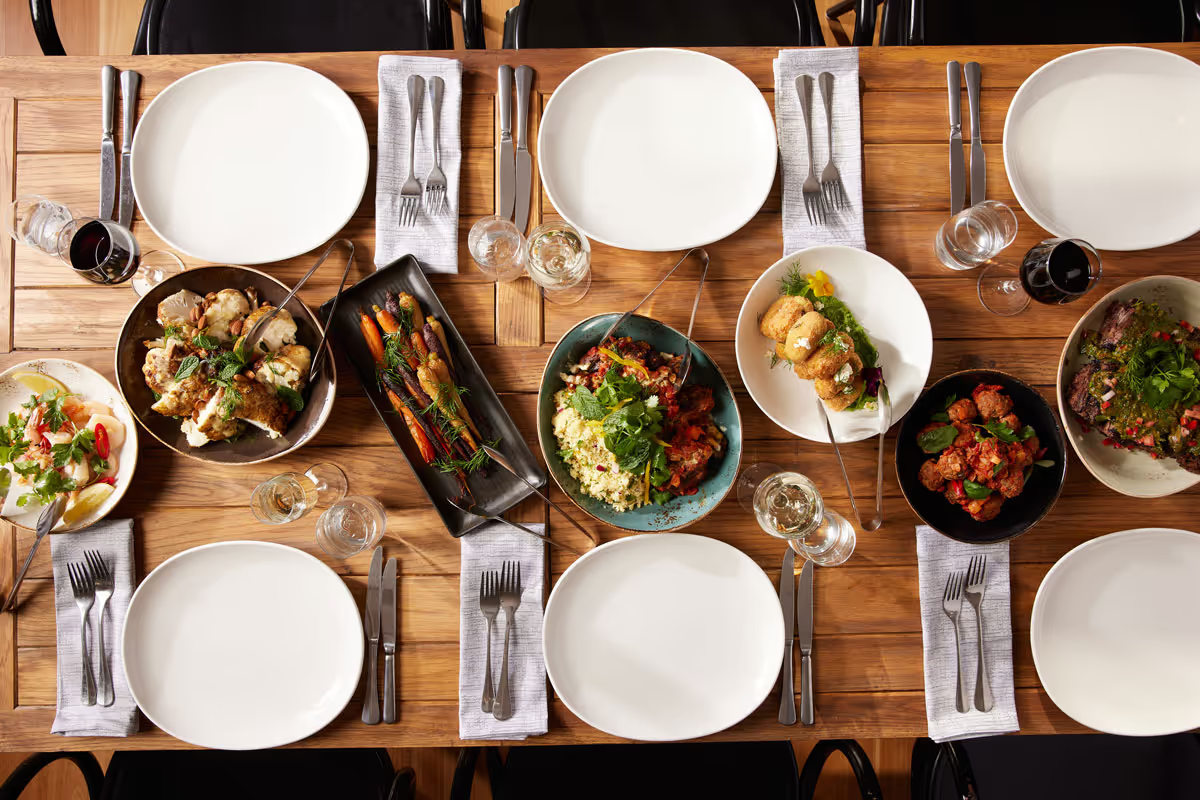
Designing Menus That Work Across Dietary Needs
Designing a menu for mixed dietary groups is about building flexibility into the food, not running separate kitchens. The goal is to create core dishes that most guests can enjoy as they are, with simple variations ready for those with specific needs. This keeps service smooth in any venue while still offering choice and interest. A well-planned menu starts with understanding the most common dietary requirements and then building dishes from ingredients and techniques that overlap. That way, one carefully designed main course can work for all diners.
Start with Naturally Inclusive Dishes
The simplest way to cater broadly is to design dishes that are already suitable for several diets before any changes are made. Instead of taking a meat dish and trying to remove allergens, chefs often start with plant-led recipes, then add optional elements.
For example, a roasted vegetable and quinoa salad with citrus dressing is naturally vegetarian, gluten-free and dairy-free. It can be served as is for vegans or topped with grilled chicken or feta for others. A roasted vegetable salad with citrus dressing is suitable for lactose-intolerant and gluten-free guests and can be finished with tofu, prawns or chicken.
By prioritising grilled, roasted, braised or steamed preparations and using stocks without flour thickeners, the kitchen avoids hidden gluten or dairy that complicates last-minute changes. Sauces and garnishes are kept on the side where possible, so the base dish remains broadly acceptable.
Build Menus Around Modular Components
Modular design lets one menu line serve multiple needs. Caterers plan plates as a combination of base protein or plant element, starch, vegetables and sauce, then identify where simple substitutions cover dietary gaps.
One plated main might be structured as:
- Base: Chargrilled chicken or marinated tofu
- Starch: Herbed rice pilaff instead of wheat-based couscous
- Vegetable: Seasonal greens prepared with olive oil instead of butter
- Sauce: One dairy-free jus plus an optional creamy sauce on the side
With this structure, guests receive the same visual presentation and portion size while the kitchen only changes one or two components. At buffets, similar thinking applies. Proteins are cooked plain with marinades that avoid gluten where possible and richer sauces are set in labelled jugs separately.
Catering Styles That Handle Mixed Diets Best
When guest lists include vegans, gluten-free guests, allergy concerns and traditional eaters, the catering style chosen can make service either very simple or very stressful. The key is selecting formats that naturally separate components and make it easy for guests to customise without slowing service or overwhelming staff.
Certain catering styles consistently work better for mixed dietary groups. These options keep the menu inclusive and appealing while maintaining clear labelling and smooth flow throughout the event.
Build Your Own Buffets and Stations
Buffets and chef-attended stations are ideal for mixed dietary needs because guests build their own plates. Instead of creating ten different plated dishes, the kitchen prepares core components and marks them.
For example, a taco or bowl station can offer separate proteins such as slow-cooked beef, grilled chicken and a plant-based option, a range of vegetables, dairy and non-dairy toppings and both flour and corn tortillas. Guests select only what suits their diet, so there is less risk of a server accidentally adding something unsuitable.
To keep this style safe and efficient, caterers use:
- Uses separate utensils and trays for common allergens
- Physically separates vegan and gluten-containing items
- Places clear, consistent labels in front of every item
This keeps queues moving because guests do not need detailed conversations with staff about ingredients at the point of service.
Family-Style Service With Planned Variety
Family-style service places shared platters on each table so guests can help themselves. For mixed dietary groups, this works well when the menu is planned with deliberate variety on every platter.
A typical family-style menu might pair a traditional roast or grilled chicken platter with a separate fully vegan main such as stuffed squash or a hearty grain and vegetable dish. Side dishes are designed so that at least one or two on every table are naturally gluten-free and dairy-free. As long as everything is clearly labelled at the table, guests can see what fits their needs without needing a special plate from the kitchen.
Thoughtfully Designed Plated Menus
Plated meals can still work for mixed diets if the menu is streamlined and variations are built from the same base components. Instead of designing completely different meals for each requirement, we create one core menu, then adjust garnishes and sauces to fit different needs.
For instance, a roasted vegetable main can be served with a dairy butter sauce for general guests and with an olive oil herb dressing for vegan or lactose-free guests. A grilled protein can be naturally gluten-free if crumb coatings and flour-based sauces are avoided from the outset.
Managing Dietary Requirements Without Disrupting Service
Managing gluten-free, vegan and allergy needs does not have to slow service or overcomplicate the kitchen. With the right planning, mixed dietary groups can be served quickly and confidently while keeping every guest safe and satisfied.
The key is to design the menu, kitchen flow and service plan around common requirements from the start instead of “fixing” them on the night. This creates a streamlined operation where special diets are integrated into service rather than treated as last-minute exceptions.
Locking in Requirements Early
The smoothest events start with clear information. Dietary questions should be built into invitations or RSVP forms with specific tick boxes such as gluten-free, dairy-free, vegetarian, vegan and nut allergy. Free-text boxes are best reserved for serious allergies or medical needs only, so requirements are easy to sort and count.
Once RSVPs close, guests can be grouped by dietary type and summarised in a simple schedule for the client and kitchen. For example, “12 gluten-free, 6 vegan, 4 nut allergy.” This allows accurate ordering and pre-planning of plated alternatives while avoiding unnecessary extra dishes. Final confirmations a few days before the event give the kitchen a stable number to work from, so there are no surprises on the day.
Designing Menus That Work Hard
Menu design is where service complexity can either escalate or stay controlled. Focusing on inclusive bases ensures the main menu already suits multiple needs, with only a small number of true variations required.
A shared main might feature a naturally gluten-free protein with sauces thickened using cornflour instead of wheat. Sides are planned so that at least one is vegan and gluten-free without feeling like a compromise. This reduces the total number of different plates leaving the kitchen and keeps plating lines simple.
All vegan guests might receive one consistent main that has been tested for speed of plating and presentation. The same applies to gluten-free desserts or mains. Limiting unique variations keeps service moving efficiently and significantly reduces the risk of plating errors.
Clear Labelling and Service Systems
On the day, strong systems prevent disruption. In the kitchen, every component is labelled with dietary tags and colour‑coded stickers, such as "GF" for gluten-free or "VGN" for vegan. Separate utensils and clearly marked prep areas are used for serious allergens to control cross‑contact.
For buffets or grazing tables, each item is clearly signed with concise tags such as “Gluten-free” or “Contains nuts” so guests can serve themselves confidently without constant questions to staff. By combining disciplined information gathering, smart menu design and consistent labelling, professionals keep service flowing smoothly while still giving every guest the attention their dietary needs require.
Common Mistakes When Catering for Mixed Dietary Groups
Catering for guests with different dietary needs does not have to slow service or overwhelm the kitchen, but several recurring mistakes make it harder than it needs to be. Understanding these pitfalls helps planners and venues protect guests, maintain speed of service and avoid last‑minute stress.
They focus on designing menus and workflows that work in real kitchens with real-time pressures. The key is to spot where mixed dietary service usually breaks down, then build simple systems that keep everything moving smoothly.
Vague or Incomplete Guest Information
One of the biggest issues is relying on vague labels like “allergies” or “dietary requirements” on RSVPs without collecting details. This results in surprise gluten-free, dairy-free or nut-free requests on the day, disrupting the pass and increasing risk.
Instead of a single open text box, organisers should use clear categories and then allow a short note only if needed. Caterers also encourage setting a firm cut‑off date for dietary updates so the kitchen can finalise prep and ordering. Another common mistake is assuming guests with dietary needs will not attend or will “sort themselves out”. If dietary questions are not prominent in invitations and reminders, the kitchen cannot plan appropriate options that integrate smoothly with the main menu.
Poor Communication Between Front and Back of House
Even a well-designed menu can fail if communication is weak. A frequent problem is not clearly mapping dietary requirements to table plans and place cards. This forces staff to quiz guests at the table, slowing service and increasing the chance of error. Professionals suggest:
- Clear dietary codes on place cards that match the kitchen run sheet
- A concise dietary summary at the top of each section on the chef’s board
- Pre-service briefings so wait staff know how each variation looks
Another mistake is not training staff on the difference between preferences and medical needs. When servers understand which meals are allergy critical, they can prioritise correct delivery without repeatedly leaving the floor to check with the kitchen.
Successfully catering for mixed dietary groups without complicating service comes down to structure and preparation. When menus are designed with inclusive base dishes, variations are limited and clearly planned, and dietary information is collected early, service remains controlled and efficient.
Clear labelling, consistent communication between front and back of house, and well-briefed staff prevent most of the issues that typically slow events down. When these systems are in place, guests experience seamless service and thoughtful food, regardless of their dietary needs.
Mixed dietary requirements are now a normal part of modern events. With the right planning approach, they do not add chaos to the kitchen. Instead, they become another element that can be managed professionally and confidently.